May 01, 2018

The Persuader's Tool Box

"Character may almost be called the most effective means of persuasion."

--Aristotle

Creating a persuader's toolbox is one way of addressing a variety of leadership styles, settings, and topics. Doing so reminds me of my dad's toolboxes filled with hammers, pliers, screwdrivers, wrenches, and tape measures.       

A tool that's often overlooked is a question. Whether it's a formal presentation or conversation, what will make the listener want to agree with you? And in your situation, what's the best way to make that happen?

In addition to a legitimate proposition and asking the right questions, what else should be in the persuader's toolbox?

o  A persuasive theory

A persuasive theory seeks a favorable response from the audience. It begins with "why."    

Carefully chosen language becomes a motivating argument that causes others to want to decide in favor of (fill in the blank). The theory, or reason to believe you, should be communicated succinctly in a few sentences. Offering too much information is likely to overwhelm an audience.  

Image result for images for "word"
(C) Oxford Dictionary
Think about how preparation in the early stages might improve the chances for success. The presenter's job, not the audience, is to sort through information in advance.

As Robert Louis Stevenson once said, "All speech is a dead language until it finds a willing hearer." 

o  Stories and themes

We were asked to arrange a mock jury. The law firm and jury consultant put the package together. After that, recruiting participants was up to us. That engagement prompted a closer examination of how lawyers try to persuade juries. 

What did we learn?

Experienced courtroom practitioners attempt to know their juries (or judges) while rolling out what they hope is a persuasive theory of the case (See United States Government v. Microsoft Corp., 2001)

Image result for images for microsoft logo
(C) Microsoft
"A skillful trial attorney knows how important it is to join a series of facts with a unifying theme as jurors deliberate and rely on themes to sort out the evidence. If attorneys don't provide the theme, jurors will do it for themselves," according to University of Washington law professor William S. Bailey. 

Employees, customers, voters, and even congregational members, are juries of their own making and require context by which to make decisions.  

In his autobiography, prominent litigation attorney David Boies writes: "There is much to be said for staying on message, but when you seek to persuade, you must address the concerns of the people you are trying to convince."  

Image result for images for coca cola
(C) Coca-Cola
What's the difference between a story (Coca-Cola's history) and a theme ("More Than a Soda Company")?  

"Stories are about the growth of character. They provide the mythic and emotional skeleton. Themes are the development of ideas and conceptual coherence," says Tristine Rainer. Powerful themes are those that resonate with ordinary human beings. A good theme acts like glue, enabling a few details to stick.    

Ask yourself--do you need a story or theme to persuade? Likely both.   

o  Rule of 3  

In Forbes Magazine, Carmine Gallo makes a strong case for staying close to the "Rule of 3" when presenting ideas. Gallo begins by quoting the U.S. Declaration of Independence, which celebrates three inalienable rights:

-Life
-Liberty
-And the pursuit of happiness
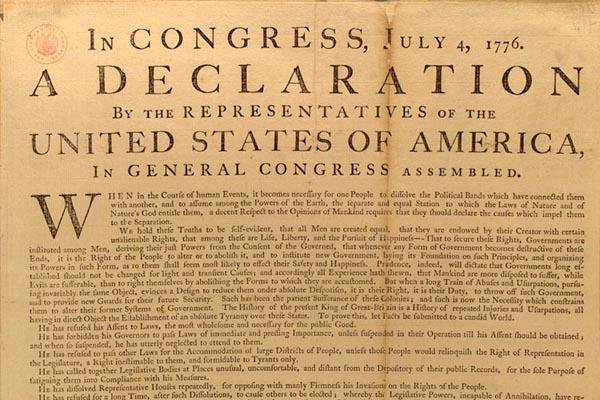
Image result for images declaration of independence
Public Domain
He reminds us that those three powerful ideas inspired France to arrange its freedoms into three groups: "Liberty, equality, and fraternity."

Gallo says Apple co-founder, Steve Jobs, loved threes. Macintosh, iPod, and iPhone. The iPad came in three models:  16, 32, and 64 GB of flash storage. The iPad was "thinner, lighter, and faster than the original."  

While our April Strategist Post reported that attention spans have much to do with the person and context, using only three pieces of information (or words) increases the likelihood of some retention on the listener's part.

Maybe that's why preachers are trained to prepare three-point sermons.  

The longer the list, the more challenging the recall.  

You get the idea.

o  Five persuasive words

Gregory Ciotti is a gifted copywriter. I came across his "copy blogger" website and found his wordsmithing approach to persuasion intriguing.   

Here are his five persuasive words:  

1. You     

Using someone's name is even better.

2. Free   

But used only when it makes sense and only in the proper context.

3. Because   

People simply like to have a reason for doing what they do (Dr. Cialdini). 

4. Instantly  

We wanted things yesterday. This idea is showing up everywhere.

5. New

New fixes to old problems. New features and improvements. New designs.

o The 3-6-9 principle

Something worth considering is the 3-6-9 principle from Robert Dilenschneider.  Mr. Dilenschneider is a professional acquaintance who, fifteen years ago, conducted a seminar for a board retreat that featured this multiplication formula:  

3x:   Number of times it takes to make an impression.

6x:   Number of times it takes to be reached.

9x:   Number of times it takes to be believed.  
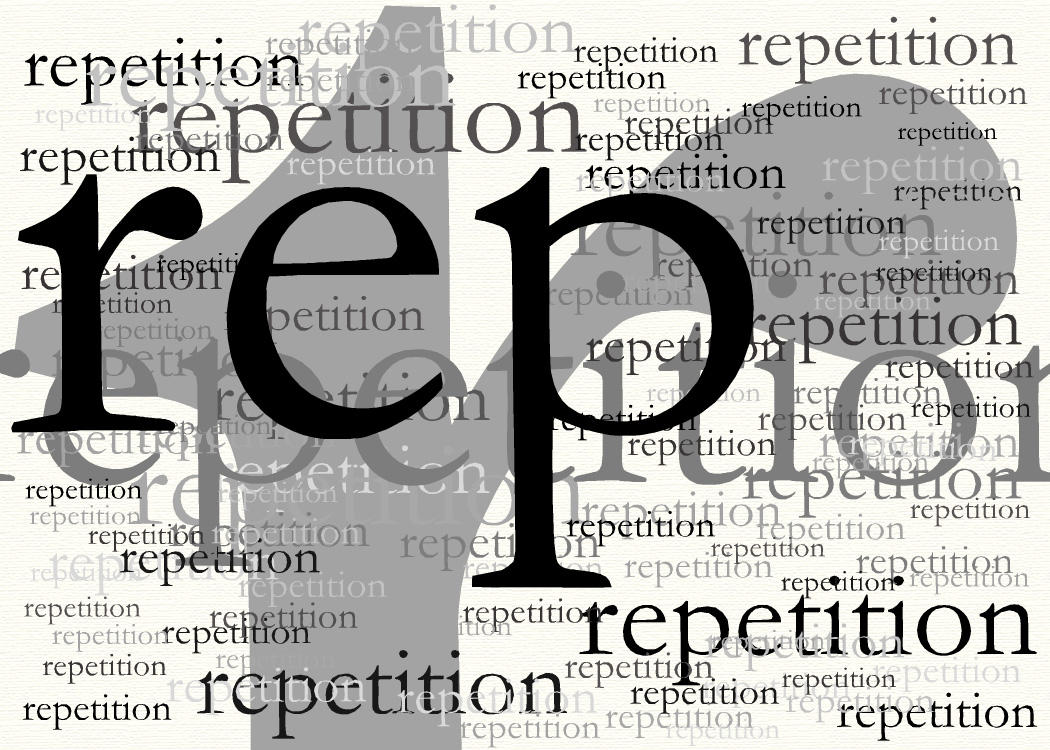
Image result for images for the word repetition
(C) dreamsOin1digital
This reinforcing matrix is a reminder that one time is not enough when attempting to deliver persuasive-type messages.    

o  Who you are

Content and context are vital to persuading--including the right platforms. But nothing is as important as your own character.  

A lot of what it takes to get and hold someone's attention, to be persuasive, rests with the individual doing the persuading. So Aristotle reminded us of a robust causal relationship between character and convincing others.  

The toolbox may help, but successful persuasion is up to you.

Strategist.com

(C) Bredholt & Co.


April 01, 2018

Partial Attention Syndrome

"Marketing is a contest for people's attention."

--Seth Godin 

In this post on persuasion, we look at the necessity of having someone's attention since you can't persuade without it.

With intelligent technologies consuming more of our time, getting and holding attention is difficult. Consulting firm Activate, Inc. estimates people spend 12 hours a day on average consuming tech and media, including moments when they're multitasking.  

While attention is a precondition of persuasion, it's not the only one. More important is having a proposition of interest to the audience. Combining attention with a legitimate message gives a speaker, sales representative, teacher, or parent at least a chance to persuade.

Overtaken by short-lived images in movies and commercials and long-winded talks with no substance, we're drawn to what stands. When creating content, simplicity and truthfulness are attractive qualities to receptive minds.

A new kind of addiction

Technology-enabled addiction to information was given a name by Linda Stone, a former Apple and Microsoft executive who in 1998 referred to this condition as continuous partial attention.  

Ms. Stone observed that drinking from a fire hose of information created "an artificial sense of constant crisis." She noted that since these crises are generally someplace else, "We are everywhere except where we actually are physical."  

Image result for images of checking  mobile phones
(C) Broadly Vice
What does it mean when leadership itself is afflicted with continuous partial attention? How does one think deeply and act clearly without having moments where the mind is free of addictive behavior?  

Constantly checking one's mobile devices during essential meetings isn't a safe way to steer a corporation.   

Preoccupied pilots

On October 21, 2009, distracted by their duties, two Northwest Airlines pilots overshot their destination by 150 miles on a flight from San Diego, California, to Minneapolis, Minnesota. As a result, Northwest flight 188 was out of radio contact with flight controllers for 77 minutes that day.

The flight landed safely at the Minneapolis-St. Paul Airport with 144 passengers and three flight attendants. But not before causing great concern in the air and ground.

Image result for image airbus A 320 northwest airlines
(C) Airliners Gallery
Captain Timothy Cheney and First Officer Richard Cole, both with spotless records, testified that they were "glued to their laptops, puzzling over a new flight scheduling system." Yet, what should have taken ten minutes extended so long that U.S. controllers asked them to execute "confidence turns" to prove that the pilots, not hijackers, were in charge of the plane.

An FAA investigation later stated that the pilots suffered from a loss of "situational awareness," which contributed to the overflight and co-pilot Cole setting the radio frequency to Winnipeg, Manitoba, Canada, instead of Minneapolis.   

The Airbus A-320 has a mechanism for sending text messages to planes in flight. But, unfortunately, there's no chime or aural alarm. As a result, these pilots were not aware of communication initiated by the Federal Aviation Administration to reach them.

Distractions are ever-present and potentially fatal.

The goldfish myth

Do you recall reading about a study by Microsoft Canada showing the human attention span dwindling from 12 seconds in 2000 to eight seconds in 2013? That finding was compared to a goldfish's average attention span, which was thought to be nine seconds.  

Image result for images of goldfish
(C) Fish Keeping Magazine
This information was reported by TIME Magazine, USA Today, and the New York Times. In addition, reference was made to the Microsoft study in a Strategist Post. 

The Consumer Insights team at Microsoft Canada surveyed 2,000 Canadians and studied the brain activity of 112 individuals as they went through daily routines. The idea of a shortened human attention span, popularized by the report, does not come from Microsoft research. That goldfish tidbit was actually sourced by Statistic Brain. Upon further examination, the finding does not hold up well under scrutiny.  

Dr. Gemma Briggs, a psychology lecturer at Open University, told Simon Maybin of BBC World Service that when it comes to listening, "It's very much task-dependent. How much attention we apply to a task will vary depending on what the task demand is ... and what the individual brings to that situation," concludes Dr. Briggs.

After studying fish behavior for almost half a century, Professor Felicity Huntingford stated that goldfish don't have short attention spans or memories, and there's no reliable evidence that human spans are shrinking.  
  
Chance favors preparation

Dr. Robert Cialdini offers this advice ...

"The most important part of any argument is preparing the audience to be convinced by it."

Dr. Cialdini's research shows that the secret to persuasion doesn't lie in the message itself but in the moment before the message is delivered.    

Therefore when it comes to changing minds or behavior, and regardless of the delivery platform, it's the speaker's responsibility to gain attention, not the audience, to automatically give it.

Related image
(C) dixit.es
If you're trying to persuade others to do something out of the ordinary, think about preparing the audience to capture attention, create empathy, meet expectations, and motivate a response.   

In a partial attention environment, the successful persuader understands its preparation above all. 
           

Strategist.com

(C) Bredholt & Co.


March 01, 2018

A Short Course in Persuasion

"There is no expedient to which a person will not resort to avoid the real labor of thinking."

--Dr. Robert Cialdini


In the first of a series of posts on the topic of "persuasion," we look at Dr. Cialdini's ideas and research findings.  They're the result of a lifetime of study while serving as professor of psychology and marketing at Arizona State University, and as visiting professor at Stanford University. 

Quotable quotes

Recently Farnam Street newsletter offered quotes from Dr. Cialdini on persuasion. Here are four that caught our attention ...

"We seem to assume that if a lot of people are doing the same thing, they must know something we don't."

"Since 95 percent of the people are imitators and only 5 percent are initiators, people are persuaded more by the actions of others than by any proof we can offer."

"In part, the answer involves an essential but poorly appreciated tenet of all communication: what we present first changes the way people experience what we present next."

"As the stimuli saturating our lives continue to grow more intricate and variable, we will have to depend increasingly on our shortcuts to handle them all."

A path to successful persuasion

Here are Dr. Cialdini's six "Principles of Persuasion:"

No. 1: Reciprocity


Simply put, people are obliged to give back to others the form of a behavior, gift, or service that they have received first.

No. 2: Scarcity

People want more of those things they can have less of.

No. 3: Authority

This is the idea that people follow the lead of credible, knowledgeable experts.

No. 4: Consistency

People like to be consistent with the things they have previously said or done.

No. 5: Liking

People prefer to say "yes" to those that they like.

No. 6: Consensus

Especially when they are uncertain, people will look to the actions and behaviors of others to determine their own.

Learn more about the six principles.

His book, "Influence, The Psychology of Persuasion," which has sold more than three million copies, may be purchased here.


www.strategist.com

(C) Bredholt & Co.


February 01, 2018

Stratagem Horribilis

"Effective strategists are not people who abstract themselves from the daily detail but quite the opposite: they are the ones who immerse themselves in it, while being able to abstract the strategic messages from it."

--Henry Mintzberg
The Battle of Passchendaele

The disturbance at the infamous World War I battle of Passchendaele (Third Battle of Ypres), conducted between July and November 1917, was not the wind but the rain, Northeastern France's heaviest rainfall in 30 years. It was sunny when the plans were made at corps headquarters; as a result, 275,000 British troops fell. 1

According to historians, the goal of the British commander, Sir Douglas Haig, was to destroy German submarine bases on Belgium's northeast coast. Going through British-held Ypres was the chosen route. 

Image result for pictures of sir douglas haig
Sir Douglas Haig, Commander in Chief, British Armies, World War I
(C) The Long, Long Trail UK

The critics argued that the planning of Passchendaele in the fields of Flanders was carried out in almost total ignorance of the conditions under which the battle had to be fought. No senior officer from the Operations Branch of the General Headquarters, it was claimed, ever set foot (or eyes) on the Passchendaele battlefield during the four months that the battle was in progress. 2

Image result for battle of passchendaele map
Battle of Passchendaele Map
(C) NZ History

Daily reports on the condition of the battlefield were first ignored, then ordered discontinued. Only after the battle did the Army chief of staff learn that he had been directing men to advance through a sea of mud. 3

The "great plan" was implemented despite the effect of the steady, drenching rain on the battlefield--despite the fact that the guns clogged, that soldiers carrying heavy ammunition slipped off their paths into muddy shell holes and drowned, that the guns could not be moved forward and the wounded could not be brought backward. 4

The book "A Short History of World War I" says: "Still the attack went on; they slept between sheets at corps headquarters and lamented that the infantry did not show more offensive spirit." 

"A staff officer ... came up to see the battlefield after it was all quiet again. He gazed out over the sea of mud, then said half to himself, "My God, did we send men to advance in that?" after which he broke down weeping, and his escort led him away."5   

Canadians to the Front 

A Canadian Corps of 100,000 strong was ordered to the Passchendaele front, east of Ypres, in mid-October 1917 to relieve New Zealand and Australian troops.

Sir Arthur Currie, commander of the Canadian Corps, objected to the battle, fearing a significant number of soldiers would lose their lives due to the physical conditions of the terrain. But, under
 orders, Currie began getting his troops ready to fight, knowing deliberate preparations, primarily for artillery and engineers, were the key to advancing over the damaged landscape.  

Nearly 16,000 Canadian soldiers fell in battle between mid-October and mid-November while capturing the targeted ridge. 6

Passchendaele Battle Summary 

105:   Number of days battle lasted

275,000:  Casualties under British command (average 2,100 per day)

220,000:  Casualties under German command

90,000:  Number of bodies never identified (42,000 not recovered)

4.25 million:  Estimated number of shells fired 

Source: Casualties and Munitions 

__________________


In Flanders Fields

In Flanders fields, the poppies blow
Between the crosses, row on row,
That mark our place; and in the sky
The larks, still bravely singing, fly
Scarce heard amid the guns below.

We are the Dead. Short days ago
We lived, felt dawn, saw sunset glow,
Loved and were loved, and now we lie
In Flanders fields.

Take up our quarrel with the foe:
To you, from failing hands, we throw
The torch; be yours to hold it high!
If ye break faith with us who die
We shall not sleep, though poppies grow
In Flanders fields.

--Canadian Lieutenant-Colonel John McCrae


Sources:  
1. Henry Mintzberg 
2. M. D. Feld
3. Ibid
4. J. L. Stokesbury
5. Ibid
6. Canadian Museum of War 


Strategist.com

(C) Bredholt & Co.


January 01, 2018

Saying "Goodbye" to Clichés

"And now we welcome the new year. Full of things that have never been."

--Rainer Maria Rilke

What would you like to do in 2018? Find a new job? Exercise more? Travel to faraway places?   

How about saying goodbye to "clichés" ("Thrown under the bus") and their poor relative, "buzzwords?" ("pivot") 

It wouldn't be easy since we're creatures of habit. But with practice, it might be possible ("only time will tell"). And those around you would be grateful. As one source noted, "Moving away from these dreaded terms means people would hear fewer phrases or opinions which are overused, and betray a lack of original thought." ("Buy in")

Management consultants and publishers may contribute to the problem when offering simplistic solutions to complex problems. ("Boiling the ocean")

What's a cliché?  

According to yourdictionary.com, a cliché can be categorized in one of two ways:

An overused expression. Something that's said a lot and has become so common it's no longer even noticed in conversation. The website offers phrases such as "to this day" or "next thing I knew" as examples.   

An idea with a different meaning from its literal meaning. Sweaty palms or twinkling eyes have real and imagined implications.

In our study, outdated is used to describe tiresome clichés like "read between the lines." Even true sayings ("all that glitters is not gold") lose their appeal by over-using.  

Origin of the word  

The word cliché has French ancestry. It comes from the clicking (clicher, to click) of printing presses. It was the printer's jargon for "stereotype" or a word or phrase that gets repeated often. How often may be the problem.

We've moved past "with all due respect."  Or, "you know what I mean." Those phrases are not helpful to anyone wanting to have an intelligent conversation.   

Where to begin?

Here are two lists. One is a subjective look at ten present-day clichés that show up frequently in business and politics and are repeated in the media. Sometimes this terminology spills over into everyday conversations. The other is a list of buzzwords found in recruiters' LinkedIn profiles.       

Ten clichés to leave behind--
  • At the end of the day
  • It is what it is
  • Going forward
  • Low-hanging fruit
  • Thinking outside the box
  • Best practices
  • Team player
  • I don't have the bandwidth
  • Getting everyone on the same page
  • Game changer
Buzzwords to avoid on a LinkedIn 
résumé-- 
  • Specialized
  • Leadership
  • Experienced
  • Focused
  • Strategic
  • Passionate
  • Excellent
  • Expert
  • Generalist
  • Successful
Being different

There may be times when it's appropriate to insert a cliché into a conversation, such as, "I lost track of time." However, it's not a good habit as clichés and buzzwords tend to diminish your credibility.  

As an original, your expressions of thought should be, too. Rather than appearing interchangeable with colleagues by using the latest jargon, consider the benefits of being clear and concise when choosing your words.    

We admire those traits in others, and they'll also be admired in you.  


Strategist.com

(C) Bredholt & Co.



December 01, 2017

The Stewardship of Time

"Beware the barrenness of a busy life."

--Socrates

The first precision timepieces, invented by Dutchman Christaan Huygens in 1657, made the ancient Egyptian idea of a 24-hour day visible. Those with access to pendulum clocks and spiral-hairspring watches could begin tracking how they spent their time.   

Nearly four centuries later, the remarkable Apple Series 3 watch allows its users to know what time it is, stay connected, make calls, and receive texts--without being near an iPhone.  

Amazing.   

Think about these things

If the present moment is all we have for sure, what then is the essence of time? How are you spending--how should you be spending--this irreplaceable gift?  

Consider the following ...
  • What are you doing right now that you could drop, and it wouldn't make any difference?
  • Are you taking time to be alone with your thoughts? Those are not lost moments but time well spent--necessary to maintain your equilibrium. 
  • In the coming year, what's the most critical investment of time you can make in yourself? Your family? Your co-workers and direct reports?  
When measuring time, it's not just how you spend it; it's also what you save. Remember the maxim, "In all things, keep something in reserve."

Therefore in managing oneself, perhaps the ultimate in personal or professional success is not wearing the latest analog or digital timepiece but having peace of mind.  


Strategist.com

(C) Bredholt & Co.

November 01, 2017

Shaping Public Opinion

"You are not entitled to your opinion. You are entitled to your informed opinion. No one is entitled to be ignorant."

--Harlon Ellison

Where do you get your news? How much do those sources influence your opinions on public policy, presidential leadership, or the country's overall direction? 

Four major platforms distribute news to U.Ss.adults. The list below shows each forum and the percentage of adults who often get their information from those sources: 

News Sources for Adults

TV--57%

Online--38%

Radio--25%

Print--20%

Source:  Pew Research Center 

According to Pew Research, "TV's staying power over print is buttressed by the fact that Americans who prefer to watch news still choose TV, while most of those who prefer to read the news have migrated online."

The digital platform continues gaining strength. The number of Americans who ever get news on a mobile device has gone up from 54% in 2013 to 72% in 2016, according to the same Pew study.

Here's another dimension to the online consumer--they're more likely to get news from professional outlets than from friends and family--but just as likely to think each provides relevant information.  

How we decide

Nearly 140 million Americans, or 60.2% of the voting-eligible population, cast a ballot in November's 2016 elections.

One year from now, those registered will have an opportunity to vote on political leadership and address their concerns about relevant issues at the ballot box. With that in mind, let's look at how public opinion has historically been shaped and formed. 

Twenty-five years ago, pollster Daniel Yankelovich wrote about how people decide in FORTUNE Magazine. His main point: "That views evolve from the unstable and flip-flopping to the mature and solid."   

Does that idea hold a quarter century later?

In the past, the public has gone through different stages of thought when confronted with public policy changes such as health care, immigration, or tax reform. Here are scenes from public opinion to the public judgment, which Yankelovich found in his own studies:

Stages of Public Opinion

Stage 1:   People begin to become aware of an issue.

Stage 2:   They develop a sense of urgency about it.

Stage 3:   They start to explore choices with the issues.

Stage 4:   Resistance to facing costs. 

Stage 5:   People weigh the pros and cons of alternatives.

Stage 6:   They take a stand intellectually.

Stage 7:   They make a responsible judgment morally and emotionally.

Thinking differently?

Is it still possible for a voting public to go through seven decision-making stages? Is breaking news short-circuiting processes of careful thought? Does the media change anyone's mind, or are most minds made up, including those of self-described independents?  

How do you decide?

A recent article in USA Today reported that 75% of those surveyed called "incivility" a national crisis, and 59% said they have quit paying attention to national politics.

Voter disengagement makes it more difficult for politicians to know which stage a particular issue has reached.  

Mr. Yankelovich observes: "Leaders attempting to communicate with the public without this information (knowing the stage) risk gridlock and frustration. Why? Because to communicate with the populace, a leader has to know where people are coming from, where they stand in their thinking now, and where they are headed."

At the same time, there's a significant role for elected officials (presidents, governors, mayors) to offer clear and compelling arguments for the direction they wish to go.    

Public policies need purpose, timeliness, and clarity to succeed. Therefore, simple policy themes, speaking to a common good, are critical for the electorate to decide what or whom to support, as the ultimate poll is taken on election day. 

Wisdom is scarce

The Internet--Facebook, Google, YouTube, and Twitter--provides easy access to reporting and commentary, and targeted advertisements. (Facebook alone delivers 517 million ad impressions per hour.) So how are voters supposed to make informed judgments based on those sources of political news and opinions? 

Discernment is certainly needed when relying on media outlets that are long on clicks and short on credibility.  

A survey from American Press Institute and the Associated Press-NORC Center for Public Affairs Research finds media's popularity at the bottom, along with Washington politicians. According to Gallup tracking data, with 2,014 adults surveyed, only 6% expressed "a lot of confidence" in the press, while the US Congress is at 7%.

When deciding, there may be some truth to an idea from 18th-century philosopher Joseph de Maistre who said: "Every nation gets the government it deserves."


Strategist.com

(C) Bredholt &  Co.