January 01, 2024
Managing a Multi-Generational Workforce
December 01, 2023
In the Presence of Greatness
"Because everything we say and do is the length and shadow of our own souls, our influence is determined by the quality of our being."
--Dr. Dale E. Turner
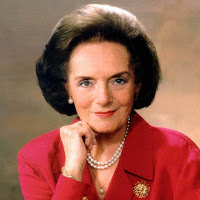
Frances Hesselbein, Dr. Edgar Schein, and Harvy Thomas distinguished themselves and were genuinely eminent. It's a privilege to have known and worked with each one. These short tributes pay homage to their character, humility, and wisdom.

Frances Hesselbein
November 1, 1915 - December 11, 2022 (aged 107)

Edgar Schein, Ph.D.
March 5, 1928 - January 26, 2023 (aged 94)
It was a long shot, but in 2007 we called Dr. Edgar Schein, the Society of Sloan Fellows professor of management emeritus at MIT and the recognized "father" of organizational culture, inviting him to join a restructuring project with our consulting firm.
Dr. Schein, who has written over three dozen management books, including the best-selling Organizational Culture & Leadership, took a week to consider the request. He called back, agreeing to consult if it could be done by phone.
Originally from Zurich, Switzerland, Dr. Schein brought common sense and experience to the three-year assignment, always with a sense of realism and encouragement.
Early on, he focused on getting a client to state the problem broadly since the exact problem may be obscure. As a process consultant, Dr. Schein said that our understanding of the matters in question improves with new insights, different perspectives, and time.
A trip to Cambridge, Massachusetts, to wrap up our work with Dr. Schein was memorable, exhausting various topics while enjoying homemade brownies.
After the engagement, Dr. Schein would write occasionally. He is missed, as are his short notes. However, those personally signed books in our library are frequently referenced for his thoughts.

Harvey Thomas, CBE
April 10, 1930 - March 13, 2022 (aged 82)
© Bredholt & Co.
November 01, 2023
Learning to Be Grateful
"Nothing is more honorable than a grateful heart."
--Lucius Annaeus Seneca
What
does it mean to be grateful?
The dictionary says, "Gratefulness is a 'state' or quality of being grateful that can provide a deeper, more unconditional, and robust experience of gratitude."
Unlike gratitude, gratefulness does not require waiting for outside circumstances to conform to our desires. It isn't positive thinking. Gratefulness is consciously choosing to adopt a grateful orientation to life, regardless of what happens. (Grateful Living)
Almost eight in ten U.S. adults regularly feel a strong sense of gratitude or thankfulness, though women (84%) are more likely than men (72%) to exhibit this pattern. (Pew Research Center)
Kristina Karns, Ph.D., assistant research professor at the University of Oregon, posted on Conversation.com, "When you're grateful, your brain becomes more charitable."
Generosity ("the virtue of giving to others freely and abundantly") is a value that builds on gratefulness and gratitude.
Joshua Becker, writing on the Becoming Minimalist website, says, "Every study ever completed on the personal effects of generosity tells us the same thing: Being generous is one of the quickest paths to happiness, fulfillment, and satisfaction."
Motivating forces to give
Giving USA estimates for 2022 indicate that Americans donated $499.33 billion to charitable organizations, representing a 3.4% decline from the previous year. Adjusted for inflation, the total declined 10.5%.
Once again, individual giving led the way with 64% or $319.04 billion, a decrease of 6.4%. Foundations gave 21% or $105.21 billion, an increase of 2.5%. Bequests accounted for 9% or $45.60 billion, a 2.3% increase. Corporations contributed 6%, or $21.08 billion, representing a 3.4% increase over 2021.
Religion (almost exclusively congregations) received $143.57 billion or 27%, the largest of any category, with a 5.2% increase over 2021. Human Services took in $71.98 billion of the total. Education, which fell to third place for the first time, received $70.07 billion, or 13% of charitable giving, a 3.6% decrease.
A person's attendance at a house of worship is the single best indicator of overall charitable giving, religious and secular. Those who frequently attend, at least two to three a month, are at a minimum three times more generous than those who attend less often or not at all. (The Lake Institute)
Generosity is an expression of faith.
The median income of the nation's churches has increased by nearly 42% over the past three years. From the Spring of 2020 to the Spring of 2023, the median income of U.S. churches increased from $120,000 to $170,000. "Even adjusting for inflation, that still represents a remarkable increase of over 25% since 2020," said Scott Thumma, Ph.D., who directed the EPIC and Faith Communities Studies.
That same report shows that the more a church emphasizes online and electronic giving, the greater its per capita income. Additionally, the greater the in-person-to-virtual ratio, the larger the per capita giving. In-person attenders gave $2,479 per capita compared to $1,053 from their virtual counterparts.
A cloudy forecast for some
Here are charitable giving trends worth watching--
-Fewer Americans are donating to charity. It was 80% in 1980, and now it is 50% in 2022. That amounts to 20 million fewer donations and a retention rate of around 43%. (Bre Alexander, iWave)
-A growing number of U.S. adults are less likely to attend religious services or identify with a specific religion. Three in ten say they have no religious affiliation. Four in ten Millennials make that claim. (NORC-AP)
-There's top-heavy philanthropy in America. Wealthy donors are giving less to charities that serve the public and more to institutions that aim to solve major problems. Just 6 donors accounted for 5% of all giving in 2022. (Winkler Group)
-And there's more competition for nonprofit donor dollars with over 450,000 new 501 (c) (3)'s in the past decade.
An uneven distribution of wealth
Baby Boomers, comprising 73 million individuals, with the youngest turning 60 and the oldest 80, are preparing for the most significant wealth transfer in U.S. history.
The New York Times suggests they are leaving behind liquid assets, homes, or going with little at all. The upper strata of Boomer households will turn over millions in cash, securities, and billions in various investments.
In 1989, total U.S. family wealth was estimated at $38 trillion. At the end of 2022, this had tripled to $140 trillion, with half held by Baby Boomers. Of the $84 trillion projected to be passed down to Millennials and Gen X heirs through 2045, $16 trillion is expected to be transferred in the next decade. (Federal Reserve)
The wealthiest 10% of households will be giving and receiving the majority of the wealth. Within that range, the top 1%--which holds about as much wealth as the bottom 90% and is predominantly white--will determine where the broadest share of money goes. The bottom 50% of households, which are more diverse, will account for only 8% of the transfers. (Federal Reserve)
"Giving while living" is a philosophy of wealth promoted by Charles Feeney, the billionaire founder of Duty-Free Shoppes. Feeney, whose biography, The Billionaire Who Wasn't, ranked #2 on the best-selling philanthropy book list and who passed away in October of this year, felt that more should be done while the principal donor is still alive. Feeney's obituary stated that he practiced what he preached, donating nearly all of his $8 billion fortune to charity "as quietly as it was made."
Where to begin
Lessons from a trove of development experiences are available to help nonprofits enhance their effectiveness.
Capturing some of the best thinking:
1. Be able to explain to a variety of audiences in clear and understandable terms what your mission is, who it serves, and how it's different. And why it deserves funding.
2. Show others how they can be part of the cause. It's not necessary to always talk about needs. Let donors know how they can contribute and play a vital role in achieving the charity's goals.
3. Donor surveys show the importance of high regard for the organization's leadership. When they have confidence in those people to perform, gifts follow.
4. People whose lives are being helped tell the story best. Testimonials are more authentic and credible when they come from those who have benefited from your outreach and compassion.
5. Mobile technology, social media, and websites communicate the latest information with donors and make giving easy. Electronic and online giving are essential for multi-generational contributions. A.I. and ChatGPT are also on the way.
Ultimately, though, giving is more about human than scientific knowledge.
6. Remember the base. Know who they are and keep them close. Be sure to say "thank you" for each dollar given.
Broaden the base through donor referrals, ensuring that adults 65 and older are included in the recruitment. They have time, money, and knowledge to share. Teaching kids to be generous is an investment in their and society's future. Involve them, too.
7. There's a 100% correlation between didn't give and wasn't asked. It's okay to ask for a gift. If you don't, those funds will likely be allocated elsewhere.
A grateful heart
Attorney John Kralik, a University of Michigan graduate, had come to the end of the line. His small law firm was failing. He was estranged from his daughter. Had gone through a painful second divorce. He was overweight and alone in a small apartment, where he would freeze or bake, depending on the season.
One day, he realized he should focus on being grateful for what he had rather than dwell on what he didn't. His book, A Simple Act of Gratitude, tells how Kralik was inspired by a thank-you note he received for sending a Christmas gift. Could that simple expression of gratitude be his way out of a miserable existence?
So John Kralik started writing thank-you notes. Not just a few. Or a dozen. He wrote 365 thank-you notes, one for each day of the year.
As the notes went out, his life began to turn around. There was financial gain. Improved personal relationships. Weight loss. An appointment to a California judgeship. And most of all, inner peace.
As to being in a place of unconditional order, John Milton wrote:
"Gratitude bestows reverence, allowing us to encounter everyday epiphanies, those transcendent moments of awe that change forever how we experience life and the world."
As we enter the holiday season, may the truth of Milton's prose be a gift to all.
Strategist.com
© Bredholt & Co.
October 01, 2023
Minding the Corporate Culture Gap
"Maintaining an effective culture is so important that it, in fact, trumps even strategy."
--Howard Stevenson
![]() |
| (C) LinkedIn |
The first hurdle is acknowledging that culture can no longer be forged in the same way as it was in the office-centric model.
Be explicit and repeat often about the purpose and meaning of the organization.
It's not that company culture somehow goes away in a remote or hybrid context. Cultural beliefs and norms are still being created and reinforced, but they're not being guided by systems and routines that were previously established in the office. They're more open to change and subject to influences from new, non-work factors present in employees' day-to-day lives.Culture is evolving despite being remote and that organizations need to invest a substantial amount of time and energy into keeping their cultures on track or steering them in new directions. Organizations that fail to do the deep work required to rethink the transmission of company culture may well have unpredictable results.
Leaders can do nothing; work to craft new ways of reinforcing the existing culture; or capitalize on the shift to remote work to profoundly reset the culture.
In summary
Corporate culture, understood and employed correctly, is a powerful force. Though the ideal culture can be different for different people.
Institutional knowledge is lost due to staff turnover, retirement, and death. Therefore, generational culture carriers are required to make the relevant historical artifacts, values, and assumptions--especially the organization's character--known to new people.
Cultures have difficulty recovering from neglect. And widespread contagions don't help.
However you decide to address the realities of this remote work--corporate culture predicament, there's a lot at stake. So watch your step.
© Bredholt & Co.
September 01, 2023
Unambiguous Leaders Are Rare
"The enemy of accountability is ambiguity."
--Patrick Lencioni
![]() |
| (C) Adobe Enterprise License |
What does it mean to be personally ambiguous when you're in a position of responsibility?
And why are unambiguous leaders hard to find?
Before pursuing that last thought, let's begin with a definition of ambiguity to determine its opposite. Dictionaries define ambiguity as "any concept, idea, statement, or claim whose meaning, intention, or interpretation cannot be definitively resolved."
Put simply, it means being vague or uncertain.
Writer Don Hermann explains that the "lack of clarity in communication, mission, and vision is nothing less than a productivity and performance killer. In short, ambiguity does nothing more than destroy profitability while protecting
ineffective leaders."
Hermann underscores that ambiguity is not a leadership value--but dealing with ambiguity is. Facing uncertainty and lacking complete information is an ever-present reality. Gathering more data doesn't reduce or resolve ambiguity. At some point, hesitation only postpones critical choices, making them harder to implement.
Our decisions will ultimately be a judgment call based on our values.
Yuval Levin reminds us that to govern is to make hard choices with incomplete information. "The pandemic shows there are no purely technical solutions for problems that demand political leadership," he says.
A study by Alexander Batsuk at Deloitte illustrates that skillfully dealing with ambiguity can help a leader succeed. "This quality deals with situations with limited information and uncertainty of outcomes in the absence of clear direction.
"On the other hand, those who lack in this area simply get paralyzed by uncertainty. A large part of the problem is social acceptance. We want to be respected by others and be perceived as fitting into the surrounding community. When you're ambiguous, there is the possibility of sounding 'neutral.' When you're clear, there is a possibility of being wrong. And who wants to be wrong," Bastuk concludes.
Observers of management behavior say that those who do their best to avoid personal ambiguity have the characteristics of honesty, decisiveness, competence, and being apolitical to the extent possible.
When Confucius says, "The moral virtue of the king is like the wind, and that of the people is like grass: whichever way the wind blows, the grass bends," he is trying to teach something about the importance of the leader's moral character. (Oxford University Press)
So why are unambiguous leaders rare?
The answer correlates with a high percentage of the populace having low levels of self-awareness; many need help knowing who they are or what they believe.
In a series of surveys, 95 percent of respondents identified as self-aware, but only 10 to 15 percent were truly self-aware.
Three reasons were given for this disconnect. First, we have blind spots. We're wired to operate on autopilot, unaware of how we're behaving and why. There's also the feel-good effect--we're happier when we see ourselves in a more positive light. That last trait is a "cult of self" courtesy of social media. (Insight, Currency Publishers)
Oxford Languages defines self-awareness as "conscious knowledge of one's character, feelings, motives, and desires."
Here's another perspective.
"Put simply, self-aware people can interpret their actions, feelings, and thoughts objectively," says Executive Coach Meredith Betz. "It's a rare skill, as many of us spiral into emotion-driven interpretations of our circumstances. Self-awareness is important because it allows leaders to assess their growth and effectiveness and change course when necessary," Betz adds.
Conversely, those with low self-awareness fail to hold themselves accountable, are dismissive of others, fail to consider the consequences of their actions, and tend to be judgmental. (PsychCentral.com)
Why or what?
One way out of the internal and external self-awareness dilemma is to switch from asking, "Why don't I speak up at meetings?" to "What can I do to overcome my fear of speaking up?" Psychologists say that "why" questions tend to deepen our negative thoughts. "What" questions move us toward particular outcomes.
"Thinking about why one is the way one is may be no better than not thinking about oneself at all." ((J. Gregory Nixon and William Swann)
Beware experience and power.
Studies show that people only sometimes learn from experience. And just as experience can lead to a false sense of confidence about our performance, it can also make us overconfident about our self-knowledge. The more power a leader holds, the more likely they are to overestimate their skills and abilities. (Tasha Eurich, Harvard Business Review)
Professor James O'Toole suggests that as a leader's power grows, their willingness to listen shrinks, either because they think they know more than their employees or because seeking feedback comes at a cost they are unwilling to pay.
Therefore, understanding the rarity of unambiguous leaders leads us to a profound truth. Being unequivocal with others means first being unmistakable with ourselves.
Strategist.com
© Bredholt & Co.