Showing posts with label Dr. Edgar Schein. Show all posts

December 01, 2023

In the Presence of Greatness

"Because everything we say and do is the length and shadow of our own souls, our influence is determined by the quality of our being." 

--Dr. Dale E. Turner

Frances Hesselbein, Dr. Edgar Schein, and Harvy Thomas distinguished themselves and were genuinely eminent. It's a privilege to have known and worked with each one. These short tributes pay homage to their character, humility, and wisdom.

Frances Hesselbein
November 1, 1915 - December 11, 2022 (aged 107)

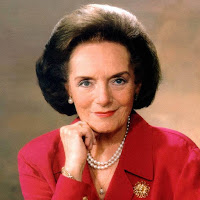
In looking for a speaker to address the topic of "mission," the obvious choice was Frances Hesselbein. Ms. Hesselbein came to our attention from her turnaround of Girl Scouts USA and work with the Peter Drucker Foundation. 

"She was incredibly focused on the Girl Scouts' mission," said Marshall Goldsmith, a prominent leadership coach and a friend of Ms. Hesselbein's. "She came up with a model called 'Tradition With a Future,'" Goldsmith added. 

Ms. Hesselbein set out to diversify the membership. She added management training for its volunteers and paid staff. She hired Halston and Bill Blass to design new uniforms. She added activities for the girls steeped in math, science, and technology.

The overhaul worked. 

Membership rose to 2.3 million in 1990, according to Businessweek. Recruitment efforts increased minority membership to 15.5 percent. Ms. Hesselbein launched a project to help scouts learn about as many as 95 career opportunities and started programs in telecommunications and marine biology designed to be done at home or at troop meetings.

In 1998, she received the Presidential Medal of Freedom, the nation's highest civilian honor. The citation read in part, "With skill and sensitivity, Frances Hesselbein has shown us how to summon the best from ourselves and our fellow citizens."

Her message about the mission was clear--know what it is, live it, repeat it often, and include everyone in its knowledge. 

Across eight decades of service, Frances Hesselbein was inspiring to children, youth, and adults. And paved the way for more women (though still not enough) in leadership.

Edgar Schein, Ph.D.
March 5, 1928 - January 26, 2023 (aged 94) 

It was a long shot, but in 2007 we called Dr. Edgar Schein, the Society of Sloan Fellows professor of management emeritus at MIT and the recognized "father" of organizational culture, inviting him to join a restructuring project with our consulting firm.

Dr. Schein, who has written over three dozen management books, including the best-selling Organizational Culture & Leadership, took a week to consider the request. He called back, agreeing to consult if it could be done by phone.  

Originally from Zurich, Switzerland, Dr. Schein brought common sense and experience to the three-year assignment, always with a sense of realism and encouragement. 

Early on, he focused on getting a client to state the problem broadly since the exact problem may be obscure. As a process consultant, Dr. Schein said that our understanding of the matters in question improves with new insights, different perspectives, and time. 

A trip to Cambridge, Massachusetts, to wrap up our work with Dr. Schein was memorable, exhausting various topics while enjoying homemade brownies. 

After the engagement, Dr. Schein would write occasionally. He is missed, as are his short notes. However, those personally signed books in our library are frequently referenced for his thoughts.

Harvey Thomas, CBE
April 10, 1930 - March 13, 2022 (aged 82)

I met Harvey Thomas at a conference in London. Harvey knew how to capture an audience's attention through his many gifts--humor among them. I recommended him to a client who used Harvey's talents in their leadership circles. 

His teaching centered on this principle--"If they didn't hear it, you didn't say it." Responsibility for communication rests with the leader. 

Between 1960 and 1975, Harvey worked for the Rev. Billy Graham Evangelistic Association. During that time, he organized Graham's world tours and massive rallies, including one in Wembley Stadium in 1965 that attracted over 100,000 worshipers. 

Using the skills and experiences he honed under Graham, Harvey first became an international public affairs consultant. He then worked for the Conservative Party under Prime Minister Margaret Thatcher's leadership, helping the party transform its communications strategy and win three general election campaigns. 

It was during this role that Harvey was caught up in the bombing of the Grand Hotel in Brighton by the IRA in October 1984. The huge bomb exploded in the room below Harvey's, resulting in Harvey being blown one floor up before crashing three floors down. He became trapped on a steel girder, topped by tons of debris and with water from burst pipes gushing past him in total darkness. 

According to doctors, Harvey's bulk saved him; a smaller and thinner person would not have survived the impact. The press reported that it was his "irrepressible nature" that a major bomb blast couldn't stop him from leaving the hospital only hours after he was rescued to continue with the party conference he had helped to organize. 

Many years after the bombing, Harvey contacted the bomber, Patrick Magee, and over time, the two became unlikely friends, with Harvey forgiving Magee, as required by his Christian faith.

In 1990, Thomas, who became a favorite with my client, was awarded the CBE--Order of the British Empire, by Prime Minister Thatcher for his distinguished service to the head of government of the United Kingdom.

Strategist.com

© Bredholt & Co.


October 01, 2023

Minding the Corporate Culture Gap

 "Maintaining an effective culture is so important that it, in fact, trumps even strategy."

--Howard Stevenson

(C) LinkedIn

If you were in any one of the 2,750 railway stations across the U.K. during King Charles III Coronation Weekend, 5-7 May 2023, you likely heard the monarch himself in a specially recorded message to "mind the gap," when boarding trains on the British Rail System and the Underground tube network.

"Wherever you are traveling, we hope you have a safe and pleasant journey. And remember, please mind the gap," Charles added.

Reuters reported that this famous phrase, the British version of the American admonishment to "watch your step," was intended to warn passengers about the gap between the train carriage and the platform. 

New norms for the office class

In his book, The Fifth Discipline, published in 1990, Peter Senge, Ph.D. wrote that it takes a powerful force to break a vicious cycle. Thirty years in advance of unprecedented nationwide lockdowns, was Dr. Senge foretelling a global pandemic reshaping in-person office work, and altering corporate cultures? 

Who could have imagined 36 months ago a coronavirus or AI would make it possible to consider normalizing a 32-hour workweek. Or that almost one billion square feet of empty office space would be on the market in the U.S. alone due to overbuilding and worker safety.

As of July 2023, 59% of full-time employees are back to being 100% on-site, while 29% are in a hybrid arrangement and 12% are completely remote, according to new data from WFH Research. 

Even Zoom is making people return to the office.

Pre-pandemic, just 5.7% of the nation's workers worked remotely. That 2019 baseline figure indicates a rapid normalization of virtual environments. (CNBC) 

"Research shows that a solid majority of knowledge workers want flexible arrangements after the pandemic. Company leaders face the challenge of reimagining their culture for a world where rituals and ceremonies enacted in the office are inaccessible," says Pamela Hinds and Brian Elliott. (Organizational Culture, Harvard Business Review, February 2021)

Those negotiations also include receiving the same pay and benefits for less time. *

How to imagine again?  

What is corporate culture?

Dr. Edgar H. Schein was a social psychologist who moved easily between academic theory and the practical sides of organizational life. A professional acquaintance, Dr. Schein was the Society of Sloan Fellows professor of management emeritus at Massachusetts Institute of Technology (MIT). His contributions to the understanding of corporate culture were groundbreaking and a lasting legacy.

Dr. Schein's book, Organizational Culture, and Leadership proposed that culture can be analyzed on three levels:  

Artifacts--the constructed environment of an organization including its architecture, technology, office layout, dress code, visible or audible behavior patterns, and public documents like employee orientation and handbooks. They are easy to collect but difficult to interpret. 

Values--the reason and/or rationalizations for why members behave the way they do.

Assumptions--typically an unconscious pattern that determines how group members perceive, think, and feel. While mostly taken for granted they are the ultimate source of values and actions.

"It is the deeply held assumptions and values that lie below the waterline but profoundly shape behavior on a day-to-day basis," says MIT lecturer Donald Sull. 

A company's culture includes the qualities that set it apart from other organizations. A well-defined culture attracts the kind of talent that prioritizes shared values. The potential outcomes are greater employee engagement, productivity, and talent retention. (Indeed) 

"In addition, it is a place where there are clear and consistent processes and healthy conflict management balanced with adaptability, learning, and the ability to shift as necessary for customers and the market," writes Tracy Bower, Ph.D., in Forbes. She adds, "A perfect match with culture is more important than particular attributes of the culture."

An opening between two things

In a new Gallup survey, more people who work from home say they don't feel a connection to the mission of their companies. A gig-worker mentality increasingly describes the current remote work environment.

The share of remote workers who said they felt a connection to their organization's purpose fell to 28% from 32% in 2022--the lowest level since before the pandemic. The findings are from interviews with 9,000 U.S. workers whose jobs can be done remotely.

By contrast, the same Gallup report shows that a third of full-time office workers reported a sense of connection, nearly the same as last year. Hybrid workers reported the highest connections with 35% saying their company's mission made them feel their jobs were important. (The Wall Street Journal)

Gallup found that 38% of people who work remotely full- or part-time are engaged, and enthused about their work, compared with 34% of in-office workers.

"Conflicting metrics show bosses don't have any easy answers as they provide flexible working arrangements yet fret about worker productivity," says Lindsay Ellis who covered this story for the Journal.  

Narrowing the gap

What should leadership be doing to create a corporate culture that transcends time and space?

Here are the main points from the Harvard study:

The first hurdle is acknowledging that culture can no longer be forged in the same way as it was in the office-centric model. 
 
Be explicit and repeat often about the purpose and meaning of the organization. 

It's not that company culture somehow goes away in a remote or hybrid context. Cultural beliefs and norms are still being created and reinforced, but they're not being guided by systems and routines that were previously established in the office. They're more open to change and subject to influences from new, non-work factors present in employees' day-to-day lives. 

Culture is evolving despite being remote and that organizations need to invest a substantial amount of time and energy into keeping their cultures on track or steering them in new directions. Organizations that fail to do the deep work required to rethink the transmission of company culture may well have unpredictable results.

Leaders can do nothing; work to craft new ways of reinforcing the existing culture; or capitalize on the shift to remote work to profoundly reset the culture. 

In summary

Corporate culture, understood and employed correctly, is a powerful force. Though the ideal culture can be different for different people. 

Institutional knowledge is lost due to staff turnover, retirement, and death. Therefore, generational culture carriers are required to make the relevant historical artifacts, values, and assumptions--especially the organization's character--known to new people. 

Cultures have difficulty recovering from neglect. And widespread contagions don't help.

However you decide to address the realities of this remote work--corporate culture predicament, there's a lot at stake. So watch your step. 


*In its Stand Up Strike against GM, Ford, and Stellantis (Chrysler, Jeep, and RAM trucks), the United Auto Workers is seeking a new contract calling for 32 hours of work with a 40% pay increase over three years.


Strategist.com

© Bredholt & Co. 


December 01, 2019

Humble Leadership

"You changed the game, man."

--Coach John Harbaugh to his Baltimore Ravens star quarterback, Lamar Jackson.

Here's the rest of that sideline conversation during a 49-12 blowout of the Cincinnati Bengals.

"And we're going to keep it going," Jackson said. 

(C) PressBoxOnline

Then comes this warm message from Coach Harbaugh:

"Do you know how many kids in this country will be wearing No. 8 playing quarterback for the next 20 years?"

Lamar Jackson, who became the first quarterback in National Football League history to throw at least 3,000 passing yards and rush for 1,500 yards in his first two NFL seasons, says with a measure of humility:

"I can't wait to see it when I get older, but I got to get to the Super Bowl right now."

The power of relationships

In their book, "Humble Leadership," father/son co-authors Edgar and Peter Schein put a spotlight on the power of relationships, openness, and trust. They turn away from a "superstar" concept and instead consider the positive outcomes when individuals learn and share for the greater good of the business.

Their idea is that a leadership process such as this can occur at any level, in any team or workgroup, in any meeting, and across all cultural boundaries.

Schein defines leadership as "always a relationship where successful leadership thrives in a group culture of high openness and high trust."  

In that sense, leadership and culture are two sides of the same coin, the book suggests.  

An unpretentious posture

I asked Dr. Schein if humbleness and humility are the same things.

"Our key point is that we don't think you have humility as a personality trait but as a situational feeling on the part of the would-be leader. An appropriate response would be--'I don't know enough to solve this complex problem I am facing; I am, in fact, dependent on my direct reports and team members; therefore, I must create a climate in which they will feel safe to speak up and collectively help to solve the problem.'"

He adds, "The goal is to know when leaders know enough to direct others and when they don't know enough, therefore seeking and accepting help."

According to executive placement firm Challenger, Gray, and Christmas, maybe organizations are ready for a "humble" approach as more than 1,300 CEOs have left their positions in 2019.  

Closer to home in Central Florida, one of those CEO departures is Tricia Stitzel, who is stepping down as Chair and CEO of Tupperware Brands. Stitzel exits with a nearly $2 million severance and a $125,000 consultant deal even though Tupperware's stock has fallen 75% from the start of 2019 and November 26th. 

Personization

Schein's introduces us to a new word, "personization," and defines it as:

Building a working relationship with fellow employees, teammates, bosses, subordinates, or colleagues is based on trying to see that person as a whole, not just in a role that he or she may occupy at the moment.

In case you're worried about having to be too nice, relax. The authors state that "personization is about building relationships that get the job done and that avoid the indifference, manipulation, or worse, lying and concealing that often arise in the workplace."

Image result for images of lamar jackson and teammates
Lamar Jackson and Ravens' teammates celebrate a win
over New England Patriots, November 13th, 2019.
(C) Todd Olszewski/Getty Images

Quoting from the book:  "We don't need to become friends and learn all about each other's  private lives, but we have to learn to be open and honest around the work issues."


Is humility proven?

In The Wall Street Journal, Matthew Kassel says humble leaders do not always inspire confidence among financial analysts. "While humble CEOs aren't any more or less capable than their brash peers, they tend to benefit from an "expectation discount," Kassel notes.  

This leadership style doesn't appear strong at first but delivers better results, perhaps as much as a 7% increase in total return annually, according to recent studies on the subject.

More research is needed, but there's something to be said about the positive track record of contemplative leadership.  

Maturity counts 

I watched the Baltimore Raven's run over the Los Angeles Rams 45-6 at the Coliseum on ESPN's Monday Night Football (November 25th, 2019). On display was an exciting second-year quarterback building relationships around openness and trust.  

Lamar Jackson is dependent on his coaches and a highly-skilled offensive and defensive roster. They are more familiar with the ins and outs of professional football and the toll a long season takes on everyone. That explains the necessity of older talent in the mix.

The Ravens v. Rams game was a visible reminder that if Baltimore made it to the Super Bowl in South Florida (Miami) in February 2020, it would be a combination of gameplan execution, staying healthy, and, as the book concludes, "personal cooperation and trusting relationships; the kind that makes for friendships and effective teams." 

That effort is being led by a 22-year-old quarterback from the University of Louisville who provides confident and humble leadership.

------------------

Update:  The Baltimore Ravens lost to the Tennessee Titans in the NFL playoffs 28 - 12. Lamar Jackson said afterward--"We just beat ourselves. I had a lot of mistakes on my behalf. Three turnovers. That shouldn't happen."  


Strategist.com

© Bredholt & Co.


October 01, 2019

What's the Problem?

"A problem well-stated is a problem half solved.

--John Dewey

I took on a complex restructuring engagement several years ago and needed help. A telephone appointment was arranged with Dr. Edgar Schein, Professor Emeritus, Work and Organization Studies, MIT, Cambridge, MA. Dr. Schein, credited with founding the field of organizational culture, is one of my favorite authors. (See "Organizational Culture and Leadership" 5th edition.)

(C) Inc.

He listened politely to the proposition. I said to think about the offer and that I would call back in a week for his response. Thankfully, Dr. Schein signed on and thus began a 36-month professional relationship with one of the great minds in strategic management. 

Dr. Schein's initial advice came in the form of a question--"What's the problem?" Then, he kept probing to ensure the client was thinking carefully and not rushing to find solutions. Why that approach? Because teams, and task forces, under pressure, often try to solve complex problems without proper judgment.  

Or they try to solve a problem when it's a "polarity" to be managed. Sample polarities or tensions include short-term vs. .long-term, centralization vs. decentralization, and growth vs. consolidation. (See "Polarity Management" by Barry Johnson.)

Defining the problem

Regardless of your position or the nature of the enterprise, problems are ever-present. They vary in degree and form and come from all directions. Some are resolved quickly by drawing on previous experiences. Others require more time and study.  

Since problem-solving and decision-making go together, what can we do to improve the process? 

For an intricate, unsettled question involving corporate strategy, you could begin by asking--

"What prevents us from reaching our goal?"

You may need to state the problem broadly since the exact problem may not be obvious. This is due to a lack of information to define it, or you confuse symptoms with underlying causes. 

Prepare a statement of the problem and find someone you trust to review it and talk it over. For example, if the problem is a job situation, check it with your supervisor or another appropriate person.  

Consider these questions

In reflecting on the situation, the right questions are helpful:

o  What's the problem?
o  Is it my problem or someone else's?
o  Can I solve it? Is it worth solving?
o  Is this the real problem, or merely a symptom of a larger one?
o  If this is an old problem, what's wrong with the previous solution?

Continuing

o  Does it need an immediate solution, or can it wait?
o  Is it likely to go away by itself?
o  Can I risk ignoring it?

o  Does the problem have an ethical dimension?
o  What conditions must the solution satisfy?
o  Will the solution affect something that must remain unchanged?

Restating the problem

Dr. Schein recommends taking your original definition of the problem and periodically updating it with new insights. Seeing intuitively comes by observing a complicated issue from different perspectives. It's also possible to come upon new facts by remaining open-minded and not giving up too soon.  

How often do you restate the problem?  

That depends on its nature and urgency. Some research on this topic suggests that in almost all cases, the conditions and constraints affecting the problem and its possible solutions change over time--sometimes dramatically--changing both the problem and the range of options designed to address it.  

And don't forget

As some questions have no answers, specific problems have no solutions.   


*Study Guides and Strategies contributed to this post.


Strategist.com

© Bredholt & Co.