Showing posts with label Giving USA. Show all posts

November 01, 2025

The Act of Giving

 iStock

"No one is useless in this world who lightens the burdens of another."

—Charles Dickens 

The results are in from Giving USA's 2025 report (for calendar year 2024) with a record $592.50 billion in charitable giving, a 6.9% increase in current dollars, and a 4.2% increase when adjusted for inflation. 

This is the first time in three years that total giving has outpaced inflation. 

Generosity —giving to others freely and abundantly —is alive and well, as donors continue to give of themselves and their financial resources to causes they care about.

Sources of giving

Giving by individuals was 66% or $392.45 billion (↑ 8.2%), foundations gave 19% or $109.81 billion (↑ 2.4%), bequests yielded 8% or $45.84 billion (↓ 1.6%), and corporations were at 7% or $44.40 billion (↑ 9.1%).  

The top five destinations for those charitable dollars were Religion at $146.54 billion (↑ 1.9%), Human Services at $91.15 billion (↑ 5.0%), Education, $88.32 billion (↑ 13.2%), Foundations, $71.02 billion (↑ 3.5%), and Public-Society Benefit at $66.84 billion (↑ 19.5%).  

Faith and finances 

The Lake Institute found that in 2024, religion continued to generate the most giving, but was the only sector to see a decline. 

"While religious organizations continue to receive the most giving across subsectors*, the proportion of giving directed toward religion has continued to gradually decline," the report stated.  

Fewer congregants may explain a reduction in giving. Gallup reports that Americans are less likely to identify as members of a church, declining from 70% in 1999 to 45% in 2023. That translates into a 25% decrease in 24 years. The highest membership rate reported in survey research was 73% in 1937, indicating that the steepest declines are more recent.

What about an exodus of older members from church? In 2000, approximately 60% of Americans aged 65 and older regularly attended church services. By 2000, that figure had dropped to 45%. That's a 15-point decrease in just one generation.

Financially, older adults are pillars of strength. The Evangelical Council for Financial Accountability (ECFA) notes that adults over 65 account for approximately 40% of all donations to U.S. churches. Their departure is felt throughout a faith community, but especially in the giving of tithes and offerings, which many consider an act of worship.

No one should rely on remote attendance to make up for any differences in giving, as about two-thirds of Americans have little to no interaction with online worship. Pew Research shows that only 14% say they participate online weekly—roughly half the rate of those who attend in person weekly. 

A Mortar/Stone survey of churches found that median household giving declined from $910 in 2021 to $600 in 2024. However, the median increased by 47% in the same period among the top 1% of givers. 

Surveys from Finances and Faith and EPIC report that while median church income increased from $150,000 to $165,000 since 2010, revenue would need to reach $209,603 to keep pace with inflation. 

The difference is frequency

A hopeful sign comes from the Giving USA Foundation's Giving by Generation Report, which found that Millennial giving per household, which increased 22% in 2024, has surpassed that of Gen X. 

Millennials report attending religious services more frequently than Gen X. That regular attendance aligns with an earlier finding from the Lake Institute, suggesting that a person's frequency of in-person worship is the single biggest indicator of overall charitable giving. 

Worship service attendance and generosity are correlated worldwide, not just in the U.S., based on Gallup surveys conducted in 145 countries from 2005 to 2009. 

Religion — primarily churches — remains the largest recipient of overall giving, and religious giving continues to be a philanthropic priority for many individuals in the U.S., according to Giving USA.

Philanthropy is resilient 

Consider these insights and trends from the Nonprofit Leadership Center, Lilly Family School of Philanthropy, Nonprofit Quarterly, and consulting firm, BWF:

o Strong donor relationships and clear communication of impact remain essential. Reaffirm the case for support. Be bold and specific about why your mission matters at this time. 

o Economic conditions make a big difference. Giving is linked to Gross Domestic Product (GDP), consumer confidence, stock market performance, tax policy, and donor trust. Now is the time to double down on transparency, governance, and impact reporting.

o Diversify funding streams. No one source. Prevent the organization from becoming vulnerable. 

o Expansion and promotion of online giving corresponds with a higher level of giving on digital platforms. 

o Charitable giving is higher, but the number of donors continues to decrease. Fewer donors are giving more money. Donor attrition and lower retention rates erode the future pipeline. AI is providing tools for retention and for identifying major gift prospects, but staff must know how to use them effectively. 

o More households are not creating wills. The numbers have dropped from 24% in the 2025 report compared to 33% in the 2022 report. More than half have no estate planning at all. The wealthy are increasingly turning away from wills and toward trusts and other sophisticated estate planning vehicles. 

o The two markets are baby boomers and younger generations. Donor-advised funds (DAFs),  qualified charitable distributions (QCDs), and required minimum distributions (RMDs) are means to a successful fundraising end with those demographic cohorts. 

An intelligent relationship

"The single biggest mistake people make in fundraising is not asking for money," says Stephanie Roth, a principal of Klein & Roth Consulting. "The next biggest mistake people make is the failure to understand that building a base of loyal donors involves much more than asking for money."

Discerning where people are in their relationship with a nonprofit is a good place to start. Donors support charities that can effect the change they seek in the world. Therefore, the importance of knowing in advance whether there's a values match between the parties cannot be overstated. 

The question is, how to create that kind of relationship?

Ms. Roth answers that "Like any other relationship, donors require some attention, some thought, and some common sense to help make that relationship as strong and meaningful as possible." 


*Churches, denominations, religious media, and missionary societies.


Strategist.com

© Bredholt & Co.


November 01, 2023

Learning to Be Grateful

"Nothing is more honorable than a grateful heart."

--Lucius Annaeus Seneca

(C) Guideposts

What does it mean to be grateful? 

The dictionary says, "Gratefulness is a 'state' or quality of being grateful that can provide a deeper, more unconditional, and robust experience of gratitude." 

Unlike gratitude, gratefulness does not require waiting for outside circumstances to conform to our desires. It isn't positive thinking. Gratefulness is consciously choosing to adopt a grateful orientation to life, regardless of what happens. (Grateful Living)  

Almost eight in ten U.S. adults regularly feel a strong sense of gratitude or thankfulness, though women (84%) are more likely than men (72%) to exhibit this pattern. (Pew Research Center) 

Kristina Karns, Ph.D., assistant research professor at the University of Oregon, posted on Conversation.com, "When you're grateful, your brain becomes more charitable."

Generosity ("the virtue of giving to others freely and abundantly") is a value that builds on gratefulness and gratitude. 

Joshua Becker, writing on the Becoming Minimalist website, says, "Every study ever completed on the personal effects of generosity tells us the same thing: Being generous is one of the quickest paths to happiness, fulfillment, and satisfaction."

Motivating forces to give

Giving USA estimates for 2022 indicate that Americans donated $499.33 billion to charitable organizations, representing a 3.4% decline from the previous year. Adjusted for inflation, the total declined 10.5%.

Once again, individual giving led the way with 64% or $319.04 billion, a decrease of 6.4%. Foundations gave 21% or $105.21 billion, an increase of 2.5%. Bequests accounted for 9% or $45.60 billion, a 2.3% increase. Corporations contributed 6%, or $21.08 billion, representing a 3.4% increase over 2021.

Religion (almost exclusively congregations) received $143.57 billion or 27%, the largest of any category, with a 5.2% increase over 2021. Human Services took in $71.98 billion of the total. Education, which fell to third place for the first time, received $70.07 billion, or 13% of charitable giving, a 3.6% decrease.

A person's attendance at a house of worship is the single best indicator of overall charitable giving, religious and secular. Those who frequently attend, at least two to three a month, are at a minimum three times more generous than those who attend less often or not at all. (The Lake Institute)

Generosity is an expression of faith.

The median income of the nation's churches has increased by nearly 42% over the past three years. From the Spring of 2020 to the Spring of 2023, the median income of U.S. churches increased from $120,000 to $170,000. "Even adjusting for inflation, that still represents a remarkable increase of over 25% since 2020," said Scott Thumma, Ph.D., who directed the EPIC and Faith Communities Studies.

That same report shows that the more a church emphasizes online and electronic giving, the greater its per capita income. Additionally, the greater the in-person-to-virtual ratio, the larger the per capita giving. In-person attenders gave $2,479 per capita compared to $1,053 from their virtual counterparts.

A cloudy forecast for some

Here are charitable giving trends worth watching--

-Fewer Americans are donating to charity. It was 80% in 1980, and now it is 50% in 2022. That amounts to 20 million fewer donations and a retention rate of around 43%. (Bre Alexander, iWave) 

-A growing number of U.S. adults are less likely to attend religious services or identify with a specific religion. Three in ten say they have no religious affiliation. Four in ten Millennials make that claim. (NORC-AP)

-There's top-heavy philanthropy in America. Wealthy donors are giving less to charities that serve the public and more to institutions that aim to solve major problems. Just 6 donors accounted for 5% of all giving in 2022. (Winkler Group)

-And there's more competition for nonprofit donor dollars with over 450,000 new 501 (c) (3)'s in the past decade. 

An uneven distribution of wealth

Baby Boomers, comprising 73 million individuals, with the youngest turning 60 and the oldest 80, are preparing for the most significant wealth transfer in U.S. history. 

The New York Times suggests they are leaving behind liquid assets, homes, or going with little at all. The upper strata of Boomer households will turn over millions in cash, securities, and billions in various investments.

In 1989, total U.S. family wealth was estimated at $38 trillion. At the end of 2022, this had tripled to $140 trillion, with half held by Baby Boomers. Of the $84 trillion projected to be passed down to Millennials and Gen X heirs through 2045, $16 trillion is expected to be transferred in the next decade. (Federal Reserve)

The wealthiest 10% of households will be giving and receiving the majority of the wealth. Within that range, the top 1%--which holds about as much wealth as the bottom 90% and is predominantly white--will determine where the broadest share of money goes. The bottom 50% of households, which are more diverse, will account for only 8% of the transfers. (Federal Reserve)

"Giving while living" is a philosophy of wealth promoted by Charles Feeney, the billionaire founder of Duty-Free Shoppes. Feeney, whose biography, The Billionaire Who Wasn't, ranked #2 on the best-selling philanthropy book list and who passed away in October of this year, felt that more should be done while the principal donor is still alive. Feeney's obituary stated that he practiced what he preached, donating nearly all of his $8 billion fortune to charity "as quietly as it was made."

Where to begin

Lessons from a trove of development experiences are available to help nonprofits enhance their effectiveness. 

Capturing some of the best thinking:

1. Be able to explain to a variety of audiences in clear and understandable terms what your mission is, who it serves, and how it's different. And why it deserves funding.  

2. Show others how they can be part of the cause. It's not necessary to always talk about needs. Let donors know how they can contribute and play a vital role in achieving the charity's goals. 

3. Donor surveys show the importance of high regard for the organization's leadership. When they have confidence in those people to perform, gifts follow.

4. People whose lives are being helped tell the story best. Testimonials are more authentic and credible when they come from those who have benefited from your outreach and compassion.

5. Mobile technology, social media, and websites communicate the latest information with donors and make giving easy. Electronic and online giving are essential for multi-generational contributions. A.I. and ChatGPT are also on the way. 

Ultimately, though, giving is more about human than scientific knowledge. 

6. Remember the base. Know who they are and keep them close. Be sure to say "thank you" for each dollar given. 

Broaden the base through donor referrals, ensuring that adults 65 and older are included in the recruitment. They have time, money, and knowledge to share. Teaching kids to be generous is an investment in their and society's future. Involve them, too.

7. There's a 100% correlation between didn't give and wasn't asked. It's okay to ask for a gift. If you don't, those funds will likely be allocated elsewhere. 

A grateful heart

Attorney John Kralik, a University of Michigan graduate, had come to the end of the line. His small law firm was failing. He was estranged from his daughter. Had gone through a painful second divorce. He was overweight and alone in a small apartment, where he would freeze or bake, depending on the season.

One day, he realized he should focus on being grateful for what he had rather than dwell on what he didn't. His book, A Simple Act of Gratitude, tells how Kralik was inspired by a thank-you note he received for sending a Christmas gift. Could that simple expression of gratitude be his way out of a miserable existence?

So John Kralik started writing thank-you notes. Not just a few. Or a dozen. He wrote 365 thank-you notes, one for each day of the year. 

As the notes went out, his life began to turn around. There was financial gain. Improved personal relationships. Weight loss. An appointment to a California judgeship. And most of all, inner peace.

As to being in a place of unconditional order, John Milton wrote: 

"Gratitude bestows reverence, allowing us to encounter everyday epiphanies, those transcendent moments of awe that change forever how we experience life and the world."

 As we enter the holiday season, may the truth of Milton's prose be a gift to all.


Strategist.com

© Bredholt & Co.


November 01, 2022

The Gift of Gratitude

"Thankfulness is the beginning of gratitude. Gratitude is the completion of thankfulness. Thankfulness may consist merely of words. Gratitude is shown in acts."

--Henri Frederic Amiel

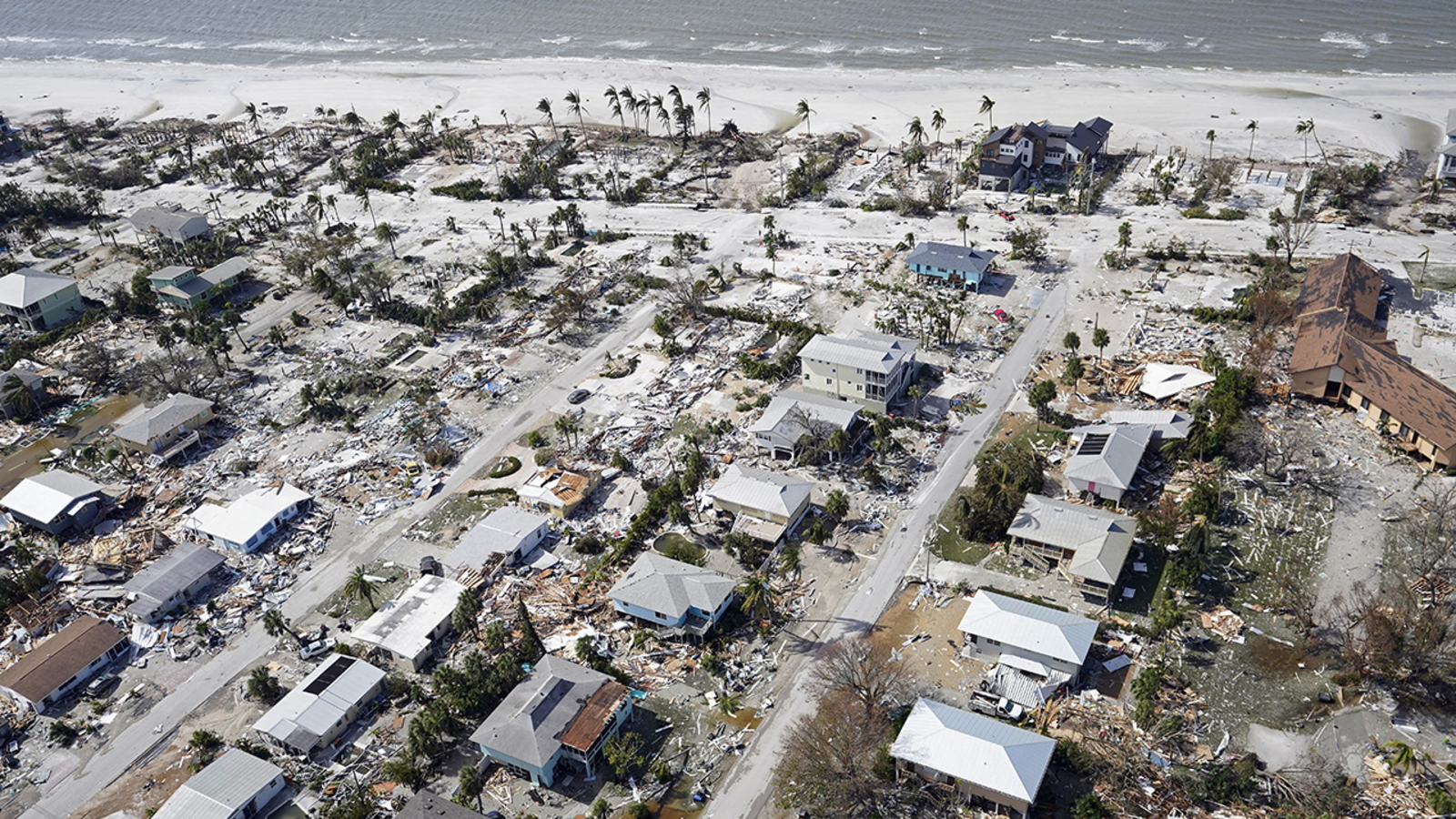
Hurricane Ian was a Category 4 storm with maximum sustained winds of 155 mph, a 12-18 foot storm surge above ground level, and 18 inches of rain (1-in-1000-year amounts in some places) that came ashore near Cayo Costa in Southwest Florida on the morning of September 28, 2022. NOAA reported that Ian tied the record for the fifth-strongest hurricane to strike the United States.

Hurricane Ian (C) NASA. The reports from survivors share a common theme: grief for loss and gratitude for life.

Ralph and Brenda Palmer's electricity was restored in their mobile home park in Fort Myers, Florida. That made it possible to survey their property and discover a home likely beyond repair. "You can't save everything my children tell me, but it's my life, and it's gone," Mrs. Palmer says to an A.P. reporter nearby. Then she begins to cry.  

"I'm glad to be alive," said 81-year-old Punta Gorda resident Susan DiGregorio. She had planned to evacuate, but the person who was to help her leave had COVID-19, and DiGregorio weighed the risks and decided to stay.

During the height of the storm, she heard aluminum screaming as her roof was ripped off. After that, she said she made peace with death.

"I'm glad to see the sun," she said on Friday. "I'm glad to hear the birds that made it through the storm." 

Florida Emergency Management reports at least 127 deaths, mostly from drowning. Power has been restored to all accounts on the mainland that can receive it (from peak outages of 2.6 million accounts across the state). CoreLogic estimates $40 to $70 billion in losses, insured and uninsured, for property. Additionally, Governor Ron DeSantis states that the power grids in Lee and Charlotte Counties will likely need to be rebuilt.

What's harder to assess is the blow to victims' mental health. That toll could mount for years.

What is gratitude? 

Psychology Today defines gratitude as an emotion that expresses appreciation for what one has rather than what one wants. 

"The practice of gratitude can have dramatic and lasting effects in a person's life, said Robert A. Emmons, professor of psychology at the University of California, Davis. Professor Emmons, a leading expert on the science of gratitude, underscores the health benefits. "Gratitude reduces lifetime risk for depression, anxiety, and substance abuse disorders, and is a key resiliency factor in the prevention of suicide." 

According to Pew Research, large majorities of the adult population regularly feel an ongoing sense of gratitude. In addition, Pew discovered that appreciation is found among individuals with and without a college degree; it is shared by people across the economic spectrum, with higher levels of gratitude more common among highly religious individuals than those who are not.

Amy Rees Anderson says gratitude is a gift. 

"The gift of gratitude is something we already possess and can learn to discover better," she writes. Her conclusion? "This gift is available should you wish to see it, take it, and cultivate it." 

How can individuals lose everything and be grateful? 

After experiencing a natural disaster of this magnitude, regaining a sense of normality may take a long time — if ever. Relocating or rebuilding are questions facing thousands of residents. Interviewed by media outlets in hard-hit areas, Floridians in their 70s and 80s say that starting over may be impossible. Their retirement dreams are now washed away with their belongings. Separated from their communities and churches, these retirees are homeless with no place to go.

Fortitude is not evenly distributed. Therefore, some individuals will need to have an oversupply of courage and compassion to help families, friends, and neighbors navigate this challenging time.

Gratitude begets generosity

As of this posting, the Florida Disaster Fund has raised over $50 million, with more coming in daily. From children collecting change to Charles Schwab's $5 million gift, the U.S. and the world are responding to the needs of people in Florida and Puerto Rico after Hurricane Fiona.

Fort Myers Beach, Florida (C) ABC7 

More than money, hundreds of trained volunteers are providing food, water, and shelter to those affected by the storm. Along with these necessities, workers offer hope to those whose lives have been upended.

The U.S. is a generous country.

Post-pandemic charitable giving in the United States reached record levels last year. In 2021, $484.85 billion was donated to charity, according to reports from Giving USA. That's a 4% increase over 2020. However, inflation-adjusted donations remained flat. 

Who gave?

  • Individuals: 67%
  • Foundations: 19%
  • Bequests: 9%
  • Corporations: 4%

The top five recipients were religion ($135.78 billion), education ($70.79 billion), human services ($65.33 billion), foundations ($64.26 billion), and public society benefit ($55.85 billion).

According to The Lake Institute, before the pandemic, a person's attendance at a house of worship was the single best indicator of overall charitable giving. Those who frequently attend worship, at least two to three times per month, are at a minimum three times more generous than those who attend less frequently or not at all. 

Investing in personal relationships and earning others' trust are the cornerstones of personal development.

For the future, philanthropy advisers at BWF recommend courting high-net-worth individuals, being clear about the charity's distinctiveness when providing services, ensuring a robust digital presence to communicate the need, and providing an easy way for individuals to respond. 

And remember to say thank you.

People want to make a difference, invest in organizations with strong leadership, and know those funds are being used for their intended purpose. 

Results are the best receipt you can give a donor.

Fully conscious of the moment

In a report from WLRN Public Radio, Sarah Meckley and her daughters survey what's left of possessions inside their Fort Myers home. They're saddened by the material losses but know scores of Gulf Coast residents don't even have a home to return to. 

Meckley and her adult children, Annabel and Abigail, don't complain.  

"All I can say is my two emotions are a sense of gratitude for our community and an overwhelming sense of being overwhelmed," Meckley said. 

That sentiment sums up the resilience of those who survive the worst Mother Nature has to give.  


Strategist.com

© Bredholt & Co. 


November 01, 2021

Quiet Generosity

"You have not lived today until you have done something for someone who can never repay you."

— John Bunyan

In 2020, a year marked by a global pandemic that caused the world to stand still, financial giving to charitable organizations in the U.S. reached a record $471.44 billion. Those contributions came from individuals, bequests, foundations, and corporations.

This information, reported by Giving USA, shows that total contributions for various causes grew 5.1%, measured in current dollars.

Laura MacDonald, chair of the Giving USA Foundation, says, "2020 represents the highest year of charitable giving on record."  This generous response is attributed to a robust year-end stock market, the COVID-19 pandemic, and concerns about racial justice.  

The donors

Here's a look at giving by source--

Giving by individuals totaled an estimated $324.10 billion, a 2.2% increase in 2020.

+Giving by foundations increased 17.0% to an estimated $88.55 billion, reaching its highest-ever dollar amount.

Giving by bequest was estimated at $41.91 billion and grew by 10.3% from 2019. This category fluctuates from year to year. 

-Giving by corporations is estimated to have declined by 6.1% in 2020 to $16.88 billion.

The recipients

Who were the top beneficiaries?

+Giving to religion grew slightly by 1.0% between 2019 and 2020, with an estimated $131.08 billion in contributions. However, adjusted for inflation, giving to religion was flat in 2020.

(C) WDHN.COM

+Giving to education is estimated to have increased by 9.0% to $71.34 billion. Educational giving includes contributions to K-12 education, higher education, and libraries. This category benefited from a robust year-end stock market.

(C) College of Charleston

+Giving to human services increased by an estimated 9.7% in 2020, totaling $65.14 billion.

(C) ISTOCK

+Giving to foundations is estimated to have increased by 2.0% to $58.17 billion.

(C) Foundation Group

An uneven picture

There are other aspects to this nearly half-trillion-dollar story.

Ms. MacDonald, the Foundation chair, notes that while the totals are record-setting, individual households and specific charities may experience different outcomes, with many facing hardships.

"In some ways, 2020 is a story of uneven impact and recovery. However, many wealthier households were more insulated from the effects of Covid-19 and the ensuing economic shock, and they have had a greater capacity to give charitably than households and communities that were disproportionately affected and struggled financially," said Amir Pasic, Ph.D., Dean of the Lilly Family School of Philanthropy.

Motivations for giving

The Lilly research briefly highlights why people gave. Donors responded to urgent needs in a pandemic-ravaged 2020. Individuals increased their support for charitable organizations through mutual aid efforts and person-to-person giving. 

"Nonprofit leaders and fundraising professionals helped themselves by showing innovation in fundraising methods and donor outreach in raising financial support under difficult circumstances," Lilly notes. 

For most, pre-existing relationships provided a support base, while forming new connections was more challenging.  

A spirit of generosity

The 2020 Giving USA report focuses on financial giving. However, other ways people can give don't require wealth, such as donating to local food banks and volunteering time to feed the homeless.  

The University of Notre Dame's Science of Generosity initiative offers an insightful examination of the concept itself. In its roots, generosity meant "of noble birth." However, over time, that meaning began to change. Generosity evolved from a family heritage to a nobility of spirit that is found in people everywhere. It no longer depended on family history but on whether a person possessed a spirit of generosity.   

"Generosity, properly understood, could call any given person to a higher standard," the Science study concludes.

An up-to-date definition of "generosity" refers to giving good things to others freely and abundantly.

The Notre Dame research offers plenty to think about--

  • Generosity is a learned character trait that involves attitude and action.
  • Generosity is not a random idea or haphazard behavior, but a mature form —a basic, personal, moral orientation to life.
  • Generosity also involves giving to others, not simply anything in abundance, but giving things that are good for others.
  • What generosity gives may vary- money, possessions, time, attention, encouragement, emotional availability, and more.
  • Thus, generosity, like all virtues, is in people's genuine enlightened self-interest to learn and practice.
Gratitude makes a difference

There may be times when, for good reasons, lead gifts in a financial campaign come with naming privileges. Or major donors give publicly, encouraging others to do the same. Notable in a culture of self-gratification is that the vast majority of the $421 billion in charitable donations in 2020 were made unobtrusively. Those donors are grateful for what they have and are willing to share with others.

And who gives might be surprising.

Sociologists Christian Smith, Michael Emerson, and Patricia Zell Herzog examined giving in detail, broadening our understanding of the social character of those who give generously. They found a reservoir of value in giving time, emotions, and energy through volunteer work.  

"Volunteering is, in fact, a consistent bright spot among researchers," they wrote. "People who do it tend to do it often and support thousands of institutions, nonprofits, and other groups that would not exist without this free work." 

In a 2000-person Internet survey conducted in 2010, the authors found that approximately 60% of the people surveyed living below the poverty line gave something, compared to 32% of those above the poverty line.

Developing cheerful givers

Looking for teachable moments? Here are four from "American Generosity:  Who Gives and Why:"

1. Seasonal giving helps build a habit in busy lives. 

2. The amount of time, energy, and money people give goes up if it's routine.

3. A huge predictor of giving is exposure to generosity as a child.  

4. Most people who participate in giving as kids, especially as volunteers, continue that habit as adults.  

What else do we need to know? 

The writer, D. L. Hope, suggests that giving is best carried out by not mingling motives.

"If you want to call attention to your good deed, then it isn't a good deed; it's a self-serving one."

(C) 123RF

From Notre Dame's study on the science of generosity to 2020's record results, there's much to be said about the practice of cheerfully giving good things to others freely, abundantly--and quietly. 


Strategist.com

© Bredholt & Co.