June 01, 2023

Summer Sabbatical

(C) The Retirement Manifesto

To our readers:

I am taking time off to work on a book project. Therefore, Strategist Post will resume on 1 September 2023. 

Consider searching the Post archives by clicking on the link below.

www.StrategistBlog.com

Thank you, and have a safe and enjoyable summer. 

Russ Bredholt, Jr.


May 01, 2023

Calling All Self-Starters and Late Bloomers in the Class of 2023

"Hard work spotlights people's character: some turn up their sleeves, some turn up their noses, and some don't turn up at all."

--Samuel J. Ewing

(C) Admissionly.com

Whether to work from home, office or hybrid is a much-posed question by employers and employees. But, unfortunately, it's out of sequence. 

Steve Rattner writes, "The notion of flexible work is a form of white-collar privilege. Those who labor in factories, restaurants, or stores don't have the luxury of working from home."

Where to work is also the wrong question, at least initially. How to work and what kind are far more important inquiries. They are preferable to one about location.  

The idea of work begins with a sense of purpose and calling, not just employment. And it's in that province where identity becomes established. 

Here are four wells of thought that contribute to a deliberative response to calling and career:

Knowing who you are.

"People, by and large, become what they think of themselves," said American psychologist and philosopher William James. He rejected genetics (Sigmund Freud) and environment (Ivan Pavlov and B.F. Skinner). Instead, James believed that we are a product of free will. We all have the option and ability to choose and control our thoughts. 

"For as he thinketh in his heart, so is he." 

Dr. John Eliot says that every morning we have a choice to make. "We can either fill our minds with negative or positive thoughts--whichever ones we consistently choose determine how successful we will be in life."  

Like Mount Rushmore, those good and bad choices sculpt our beliefs, values, trustworthiness, and moral character--revealing who we are. Aristotle said, "Knowing yourself is the beginning of all wisdom."

Taking personal responsibility in today's culture stands out like a lantern in a darkened room. Therefore, holding yourself accountable for your actions, and exercising self-control, is an attractive quality for anyone looking to hire. 

Regardless of frustrations and disappointments, which are always with us, we must believe and act anyway.

Work is learned.

Here are four declarations to consider:

  • First, a work ethic is a unique set of values determining how employees approach their work.
  • Employees with strong work ethics are highly motivated and produce high-quality work.
  • A good work ethic can be taught (learned) through productive behaviors. Employees like these exhibit model behavior for others to emulate. 
  • The benefits are increased productivity and a respectable workplace. (Personio.com) 

A recent article in The Wall Street Journal described how employers, fed up with late arrivals and mobile phone distractions, are hiring older people. As a result, those over 55 are the fastest-growing segment of the workplace. 

Three-quarters of people 65 and older said that hard work is vital to them personally. Among 18-29-year-olds, 61% said hard work is very important. (The Wall Street Journal-NORC Survey)

"Managers and recruiters say that remote work made it tough for some young workers to find mentors and learn professional norms in the office," observes Julia Lamm, a partner at PricewaterhouseCoopers. "As a result, many of these young workers struggle with resourcefulness, professional networking, and communications with clients and c0-workers,"  Lamm concludes. 

Nevertheless, despite the negative attention, Gen Z workers are making their presence known with ingenuity and hustle. Some are starting businesses and working long hours to make them go. These entrepreneurs are an encouraging look into the future.

Here's a small but valuable piece of practical advice shared with me: Learn to do one job that nobody can or wants to do but is important to the organization's success. 

Getting the right experiences.

Personal and professional development comes from experience (70%) and forms of learning such as seminars, reading, observation, and feedback. (30%). Not just any kind of experience will do. It must be the right kind coupled with takeaways from those experiences--which don't always show up immediately. 

Development requires insight from positive and negative encounters to get the most out of them. Something from those bumps on the head should make the pain worthwhile. And it's less costly to learn from someone else's mistakes. So take advantage. 

How to get a good experience? Start something. Fix or turn around something. Enlarge your responsibility. Take on special projects. Learn to endure hardships. (Center for Creative Leadership)

Consider serving on an in-person task force early in your career, even if it's outside your professional interests. Benefit from individuals who know when and how to speak, process, sit at a table, dress appropriately, and interact with colleagues. Regrettably, some participants are notable for the wrong reasons. Learn from them, too.

An ad hoc opportunity such as this is like getting an advanced emotional and social skills degree without the tuition.  

The contours of a successful life.

A tip for taking better pictures from a distance is not to zoom in, as it makes the photo grainy or blurry. There's no need to zoom in too soon. If it's safe, better to get closer to the subject to avoid compromising quality. The same holds true for envisioning one's life.

Over time, the contours of success come into focus through proximity to the right circumstances and engaging in healthy mental and physical practices. In addition, international travel for business or pleasure expands your horizons as cross-cultural knowledge is invaluable.  

You are rich if one person of integrity, humility, and sound judgment enters your life and stays there long enough to make a difference, often by listening and asking questions. All to assist in becoming more self-aware. Quoting Leonardo da Vinci, "The greatest deception men suffer is from their own opinions." 

A sensible definition of personal success comes from Marcus Buckingham, who wrote, "Success is not about money, title, or recognition. Instead, success is the ability to make and sustain a significant contribution."

Think about it. 

Regardless of the starting point--with self-knowledge, hard work, pacing, and a few breaks-- fulfillment is achievable no matter where you serve.  


Strategist.com

©  Bredholt & Co.


April 01, 2023

The Church in Transition and Change

"It has never stopped being under construction."

--Mylène Pardoen, Cathedral of Notre Dame, Paris

(C) Cathedral of Notre Dame Bureau Bas Smets

A family trip to France in the summer of 1987 included the first of several visits over the years to Notre-Dame de Paris, one of the great marvels of French Gothic architecture. With 13 million tourists annually, the Cathedral is more popular than the Eiffel Tower, 15 minutes away.  

There was shock and sadness worldwide when news broke on 15 April 2019 of a massive fire engulfing one of France's most famous landmarks. The Cathedral's underlying oak tree frame, carved in AD 1163, was a source of vulnerability. 

The 850-year-old Gothic building's spire and roof collapsed, but the main structure, including the two bell towers, was saved. Thankfully, no one was killed, and no firefighter lost their lives in putting out the blaze. Observers noted that despite the long road ahead, there's reason for optimism.

The Associated Press recently reported that the reconstruction of Notre Dame Cathedral is progressing quickly enough to allow its reopening to visitors and faithful at the end of 2024, less than 6 years after the fire destroyed the roof.

Tracking historical trends

The earliest archeologically identified Christian church is a house church (domus ecclesiae), the Dura-Europos church, founded between 233 and 256. (Graydon F. Snyder, 2003, Ante Pacem, Mercer University Press. p. 128.)  Since then, church properties worldwide — Byzantine and Romanesque, with pointed arches and vaulted ceilings, thatched roofs and no roofs, homes and storefronts, some even carved out of rock — have become places of assembly set aside for Christian worship.

Nearly one-third, or 31.2% of the world's eight billion population, is considered Christian. The term Christian encompasses a broad range of denominations, with Roman Catholicism the largest, with around 1.36 billion adherents. Protestants, Evangelicals, Orthodox, Anglicans, and many other sub-denominations are included in the count. (learnreligions.com; Institute for Advanced Catholic Studies at USC; Pew Research Center)

According to an average of all 2021 Gallup polling, about three in four Americans said they identify with a specific religious faith. By far the largest proportion, 69%, identifies with a Christian religion, including 35% who are Protestant, 22% who are Catholic, and 12% who identify with another Christian faith or simply as a "Christian."

Twenty-one percent of Americans said they have no religious preference, and 3% did not answer the question.

Fifty years ago, in 1971, 90% of U.S. adults identified with a Christian religion, 6% with another religion, and 4% did not have a religious preference. Thus, much of the change in the U.S. has been a shift from Christian religions to no religion. 1

A precipice? 

Suppose you only read the news headlines about organized religion, not the stories themselves. In that case, it's possible to conclude that the church, especially in first-world areas like America, is a slow-motion version of the Cathedral spire and roof falling to the ground.

Here's a sampling from U.S. publications and research firms over the past three years:

  • "U.S. Church Membership Falls Below Majority for First Time."--Gallup, 26 March 2021
  • "About Three-in-Ten U.S. Adults Are Religiously Unaffiliated."--Pew Research Center, 14 December 2021
  • "The Pandemic May Be Ending, but the Church's Fight Is Just Beginning."--Christianity Today, 14 June 2022
  • "Losing their religion: Why U.S. churches are on the decline."--The Guardian, 22 January 2023

Much, but not all, of the decline over the past 50 years resulted from a sharp drop in Catholic attendance after Vatican II. (Roger Finke, Ph.D., Penn State University) While the rise of the "nones," mostly among Millennials and Generation X, has gained attention, little notice has been paid to the other side of the faith spectrum.

A study published in early 2018 shows that "intense religion—strong affiliation, very frequent practice, literalism, and evangelicalism—is persistent, and in fact, only moderate religion is on the decline in the U.S." (Landon Schnabel, Indiana University; Sean Bock, Harvard University) 

Vitality is found in nondenominational churches. The 2020 U.S. Religious Census shows that those congregations increased by 4,000 since 2010 and rose by 6.5 million in attendance in that same period. A significant part of that growth comes from the Catholic-to-nondenominational pipeline and retention of children. (Ryan Burge, Ph.D., Eastern Illinois University)

The Atlantic reported in 2021 that Latino evangelicals are the fastest-growing segment of the evangelical community in the country. It also said that "Latino Protestants, in particular, have higher levels of religiosity"-with more frequent church attendance, prayer, and Bible study than White Protestants. 

A revival at Asbury University in Kentucky, which began in February of this year, is a reminder that studying religion is more prudent than predicting its future. "Religious history is shaped as much by sudden irruptions as long trajectories, as much by the mystical and personal as by the institutional and sociological," wrote Ross Douthat in the New York Times.

Ministry is (mostly) analog.

Though decreasing church participation pre-dates Covid-19 by at least a generation, there's no question that the pandemic is further restructuring relationships with houses of worship. 

"Churches waiting for more people to return on Sunday morning are still waiting," wrote Kate Shellnutt in Christianity Today. She added, "While overall reach has expanded, there's a segment of Christians who used to belong to a church community who aren't engaging at all anymore: 12% of formerly regular churchgoers say they're not attending in person or watching online." (Pew Research Center)

So why don't those who have resumed their everyday lives attend in person or virtually? It's a follow-up question to consider asking as a matter of concern. Although knowing why people returned — or never left — may hold greater value.  


Digital worship, like remote work and schooling, lessens the magnitude of a communal experience. 

"Virtual services, webcasting, and online Bible studies are certainly better than no religious participation. However, none is likely to be a fully adequate replacement for the in-person meetings and community, wrote Harvard professor Tyler J. VanderWeele, who studies these interactions. 

But, of course, health, job schedules, and caregiving are legitimate reasons for online worship. And that format helps avoid social isolation, an unhealthy state of being. 

Benefits of frequent service attendance

"We have to retrain people from the beginning on why you should bother to assemble," said Collin Hansen, who wrote Rediscover Church: Why the Body of Christ is Essential. 

Let's remind everyone that faith communities are sometimes disordered and filled with flawed people. Yet, changed lives speak of God's grace, meeting individuals where they are. Like the Cathedral of Notre Dame, the Christian life is always under construction.

In addition to scriptural exhortation, pre-pandemic research from the Harvard T. H. Chan School of Public Health and other sources reveals why frequent in-person service attendance is vital to wholeness and well-being: 2

o First, there's a closeness with God not always felt when alone. Forgiveness is a theme, and caring for others is a priority as needs are made known.

o A belief system offers clear moral guidance, creating relationships of accountability to reinforce positive behavior. Some religious communities can provide a social safety net that other institutions can't easily replace. 

o People who attended weekly religious services or practiced prayer and meditation in their youth reported greater life satisfaction in their twenties. For example, they were less likely to subsequently report depression, substance abuse, and premature sexual activity than people raised with less regular spiritual habits. They were also more likely to grow up happier, to be forgiving, to have a sense of purpose, and to volunteer.

o Multiple mental and physical health benefits correlate with attending church once a week or more, including reducing mortality by 20% to 30% over 15 years. In addition, people who participate at that frequency are significantly less likely to die from "deaths of despair" (suicides, drug overdose, or alcohol poisoning).  

o Those who attend services two to three times per month are generous givers. They are more charitable to the church, nonprofits, and secular institutions than those who don't attend or do so less often. 

Habits of the heart

While research shows improved personal health correlates with attending church regularly, one's spiritual well-being may be the more critical beneficiary of frequent in-person attendance. 

The 19th-century English preacher Charles H. Spurgeon, whose church, London's Park Street Chapel, suffered through the Broad Street cholera outbreak of 1854, reminds us it's not about music, presentation, or architecture. 

Instead, Rev. Spurgeon said, "Go where the gospel is preached and go often."


National trends don't necessarily imply the same positive or negative trend in a particular location. In addition, nationwide data can differ from specific areas for cultural, demographic, or political reasons. A recent Wall Street Journal/NORC study showing patriotism, religion, and hard work in decline in the U.S. is an example of that phenomenon.

2 Findings were published in the following sources:  Journal of the American Medical Association, American Journal of Epidemiology, USA Today, Christianity Today, Harvard T. H. Chan School of Public Health, Lake Institute, Edge Foundation, and The Heritage Foundation. 


Strategist.com

© Bredholt & Co.


March 01, 2023

Is Truth Getting Harder to Find?

"I'm not upset that you lied to me. I'm upset that from now on, I can't believe you."

--Frederich Neitzsche 

(C) Getty Images

A culture of ambiguity

Why is it becoming so difficult to believe anyone? Are a proliferation of opinions and speculations undermining our ability to sort through all we see and hear? Would see and hearing less help? 

"Whatever the topic, we're bombarded with polarizing news and social media. Many people cope with the uncertainty--and fear produced by it--by placing 'trust' in the 'leaders' they see as able to cut through the noise and provide guidance around what to believe and what to do. 

"It's easier to trust a single person (politician, podcast host, social media influencer, etc.) and follow their lead versus evaluating every issue oneself," noted Soren Kaplan in Inc. Magazine. 

Delegating judgment to a single filter (individual or group) simplifies life but simultaneously invites the potential for disappointment if the filter can't be trusted. Even amidst the noise, we must know who and what to believe, whether human or artificial communication. 

Discernment makes that possible. 

Institutional trust in decline

Is there a connection between the mistrust in media and the government? 

"Journalists and politicians have become ensnared in a symbiotic web of lies that misleads the public," contends Paul H. Weaver, a former political scientist at Harvard University. 

Just 7% of Americans have "a great deal" of trust and confidence in the media, and 27% have "a fair amount." Meanwhile, 28% of U.S. adults say they have little confidence, and 38% have none in newspapers, TV, and radio. (Gallup 2022)

Similar results show up in polling on trust in government. Americans continue to lack faith in the federal government, with low trust in all three branches. Gallup previously reported that trust in the federal government's judicial branch has cratered in the past two years; it now sits at 47%, below the majority level for the first time in Gallup's polling history. 

At 43%, trust in the executive branch is just three percentage points above its record low from the Watergate era. Americans are even less trusting in the legislative branch, at 38%, but this figure has been as low as 28% in the past. (Gallup 2022)

Watch what you say

Why do people knowingly lie? Because in the short-term, they think they can get away with it, and often do.  

In his book, Why Leaders Lie, University of Chicago professor, Dr. John J. Mearsheimer, says that before defining lying, spinning, and concealment, it's necessary to understand deception and truth telling--the direct opposite of deception:

Truth-telling. When an individual does their best to state the facts and tell a story straightforwardly and honestly. A truth-teller resolves biases or selfish interests to report relevant facts fairly.

Deception. Where intentional steps are taken to prevent others from knowing the whole truth--as that individual understands it--about a particular matter. 

Lying. When a person makes a statement that they know or suspect to be false in the hopes others will think it to be true. But lying is not only about the truthfulness of particular facts; it can also involve the disingenuous arrangement of points to tell a fictitious story.

Spinning. Telling a story that emphasizes specific facts and links them together in ways that play to their advantage--while downplaying or ignoring inconvenient facts. The American Bar Association stipulates that "a lawyer shall not knowingly make a false statement of fact or law to a  tribunal." Still, spinning is routine behavior on behalf of their clients.

Concealment. Withholding information that might undermine or weaken one's position.

(C) Shruti Sharma
Operating under pressure

Dana Brownlee makes a case for being as truthful as possible by showing the damage leaders do to themselves, their employees, and the company when distortions appear. Her article in Forbes Magazine highlights the following:

1. Lying erodes trust. For leaders, credibility is everything, and lying is simply the kryptonite that destroys a team's confidence in their leader.

2. If people think you're lying, they may assume things are worse than they actually are. 

3. Employees don't respect liars. Associates don't like being lied to. 

4. If you lie about the small things, colleagues may distrust you with the big stuff. When stakes are the highest, goodwill may not be there when needed most.

5. Lying encourages others to lie. Normalizing this type of behavior could come back to haunt you.

How to be transparent when entertaining questions from employees--

  • Tell them the truth.
  • Tell them you don't know, but you'll find out.
  • Tell them that you can't tell them.

"To err is human."

As the famous physicist Stephen Hawking said: "One of the basic rules of the universe is that nothing is perfect. Perfection simply doesn't exist. Without imperfection, neither you nor I would exist."    

Nonetheless, a bad character is redeemable and behavioral consistency is achievable. More than simply change, transformation is the way to reach our highest potential. That's how admired qualities like self-awareness, courage, and gratitude are acquired. 

Additionally, any position of responsibility requires humility and good judgment, as no one can access all the information needed to make decisions or flawlessly interpret the times. 

Albert Schweitzer once wrote, "The great enemy of morality is indifference." Thankfully, many do care enough to embrace honesty, which is more than not lying, deceiving, or cheating. It also means showing respect toward others. 

An honorable life with guiding principles makes reality unambiguous. And truth easier to find.  


Strategist.com

©  Bredholt & Co.


February 01, 2023

The Future of EVs? A Long and Winding Road

"Each day we go to our work in the hope of discovering."

--Nikola Tesla

A friend, Norm Warner, took me for a ride in his silver Tesla X, my first in a battery electric car (BEV). The Model X is a mid-size luxury crossover SUV introduced by Tesla in 2015. This vehicle was developed from the full-size sedan platform of the Tesla Model S. 

Tesla X is notable for its falcon-wing passenger doors and panoramic windshield. But, as we soon experienced, the car has power and quick acceleration. 

Are this plug-in design and government-subsidized business model (low-interest loans and tax credits) what Stellantis CEO, Carlos Taveras, calls a "technology chosen by politicians" the future of the automobile industry? Selling electric vehicles with rechargeable batteries as a way to significantly reduce CO2 emissions? 

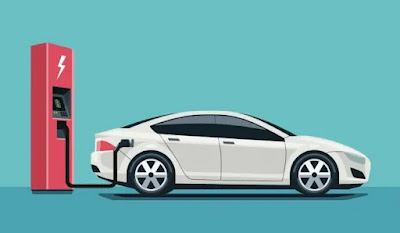
Although 100% EVs are not a zero carbon solution. The electricity used to charge most electric and hybrid cars often come from non-renewable resources.

(C) Greentech Media

With visually appealing designs and the latest software, EVs continue a 137-year-old industry that began in Germany when Karl Benz received a patent for the first automobile powered by an internal combustion engine (ICE). The U.S. auto industry got its start ten years later, in 1896.

Electric vehicle sales were around 10% globally in 2022, led by Europe and China. EV sales in the U.S. were 6% last year, with a goal of 50% by 2030. 

What are the critical factors for success in manufacturing and marketing a vehicle without a tailpipe? 

Batteries

Everything anyone needs to know about EVs and their profitability can be found in battery technology. "EVs that make efficient use of battery supplies should be more profitable to manufacture--all else being equal." (The Wall Street Journal)   

The advantage goes to those who can "squeeze" the most juice from their batteries located at the bottom center of the car. But, for the longer term, battery costs have to come down. A next-generation battery, known as LFP, will make it possible to build affordable electric cars. Unfortunately, the downsides are cold weather charging and less driving range. (Recurrent)

The Eagle Mine near Marquette in Michigan's Upper Peninsula is the only place in the U.S. where nickel--the mineral in lithium-ion batteries boosting electric car range on a single charge--is produced. (MLive.com) Meanwhile, 75 percent of lithium is mined in South America, specifically in Chile, Bolivia, and Argentina. (Green Cars)

Currently, Chinese companies make up 56% of the EV battery market, followed by Korean companies (26%) and Japanese manufacturers (10%). The leading battery supplier, CATL, expanded its market share from 32% in 2021 to 34% in 2022. One-third of the world's EV batteries come from that Chinese company. (Oil Price)

Announced investments in battery and battery recycling plants in the U.S. totaled $40 billion in 2022. (Electrek) Georgia, Kentucky, and Michigan are likely to dominate battery plant production. With Kansas, North and South Carolina, Ohio, and Tennessee, among other key sites. (U.S. Department of Transportation)

Charging

About 80% of EV charging happens at home. This works for those who live in single-family dwellings but not multi-family units, which make up nearly 32% of all U.S. housing.

At the end of 2022, about 140,000 public charging units were up and running in the U.S., according to government reports. Plans call for a 500,000-station national network over the remainder of this decade, a ninety billion-dollar investment, most of which is expected to come from the private sector. 

In the U.S., Tesla has more than 1,400 Supercharger stations (40,000+ globally) and 7,000 charger stations. Superchargers take 15 minutes to recharge up to 322 miles. (U.S. News and World Report, Tesla.com) 

The U.S. Transportation Department approved electric vehicle charging station plans for all 50 states, Washington, D.C., and Puerto Rico, covering roughly 75,000 miles of highways. Early last year, the Biden administration allocated $5 billion to states to fund EV chargers over five years along the interstate highway system. (CNBC) 

Yet many U.S. public charging stations fail to work when electric-vehicle drivers need them, according to a new J.D. Power report that underscores the Biden administration's challenge in building out a network of stations nationwideIn a survey of more than 11,550 drivers, the firm found that one in five didn't manage to charge their vehicle during a visit to a station. Of those that didn't get their cars set up, 72% blamed faulty equipment. (Bloomberg)

Affordability

The EV market is dominated by luxury cars, with Tesla controlling 65% of the U.S. market. Regrettably, the cost of these cars is still well beyond the reach of many Americans. (Forbes)

According to the U.S. Census, the median household income was $70,784 in 2021, the most recent year for which data is available. The average price for an electric vehicle in July of 2022 was over $66,000. (Kelly Blue Book) Non-EV cars averaged $45,596. (Edmunds) Average monthly car payments for new vehicle loans reached $691 at the end of 2022. (Center for Auto Research)
"Car buyers love EVs but not the prices." 
--Reporting from the Washington D.C. Auto Show, Jeanne Whalen, The Washington Post  
28 January 2023
The cheapest electric car in 2022 was the Nissan Leaf, which retails for $27,400, with Chevrolet's Bolt at $31,000. More lower-priced EVs are on the drawing board than in dealer showrooms. The problem is that EV prices continue rising, with batteries costing more.

With solid demand among higher-income groups, there's little incentive to reduce the cost of upper-end EVs. Although Tesla recently dropped prices by 6% to 20% on a range of vehicles in response to slowing demand for some of its products. Tesla's move to cut prices on its Model 3 and the Model Y SUV is igniting a potential price war that rival Ford Motor Co. is joining.

EV purchase profiles in major publications such as The New York Times point out that affluent households retain at least one internal combustion vehicle for long-distance travel.

New Internal Revenue Service income limits for the federal $7,500 electric-vehicle tax credit kicked in on 1 January this year. Those with an adjusted gross income of $150,000 for individuals and $300,000 for joint filers can no longer claim the tax credit.

Availability

Brand loyalty for cars, SUVs, and trucks could be a casualty of EV competition. Especially when it comes to availability. As more EVs enter the market, car makers realize that customers are willing to consider new brands, even turning away from dealers they've frequented for decades. A recent report in The Wall Street Journal says that has to do with EV scarcity. 

According to data from J.D. Power, there are currently 53 electric vehicles on the market or soon to be rolled out, compared with 625 car models sold in the United States

Safety

Cautions were raised recently by National Transportation Safety Board Chairwoman Jennifer Homendy about the weight and size of EVs. "I'm concerned about the increased risk of severe injury and death for all road users from heavier curb weights and increasing size, power, and performance of vehicles on our roads, including electric vehicles," Homendy said in remarks delivered Wednesday in Washington, D.C.  

Electric vehicle batteries are heavy and expensive, and automakers can charge more for larger cars. Homendy called out General Motors Co.'s GMC Hummer EV as a particularly egregious example of the trend toward more oversized, heavier vehicles, noting it tips the scales at more than 9,000 pounds.

"The battery pack alone weighs over 2,900 pounds — about the weight of a Honda Civic," she said. "That has a significant impact on safety for all road users."

The transport safety regulator also mentioned that Ford's F-150 Lightning pickup is as much as 3,000 pounds heavier than a non-electric version of the same truck and that Ford's Mustang Mach-E and Volvo's XC40 EV weigh about 33% more than gas-powered equivalents. (Bloomberg)   

Politics

Follow the money.

The White House has invested about $135 billion in electric vehicle development and creation and will now make available $350 billion in federal loans and loan guarantees for energy and automotive projects. In addition, tax credits included in the recently passed Inflation Reduction Act provide incentives for consumers to buy EVs. 

Manufacturers require financial help as they transition to an indeterminate future with no guarantee of success. Federal and state regulations get baked into any assistance, including which vehicles qualify for tax credits. 

General Motors, which announced a plan to sell only zero-emission cars and trucks by 2035, spent $9.1 million on federal lobbying in 2022; Toyota $6 million; Ford $4.2 million; Stellantis $3.9 million; Honda $2 million; and Telsa $400,000.

According to GM's public statements, government subsidies may be the only way the company can make decent margins on electric vehicles over the next three years. (Heard on the Street) 

Margins rather than volume are driving the General Motors business plan, with vehicles like the GMC Hummer EV2 ($80,000), Cadillac Lyriq SUV ($60,000), and Chevy Silverado ($50,000 work truck version with higher-end prices for personal use), leading the way. Some refer to GM as "Elite Motors," with many of its current customers unable to purchase high-end products, ICE or EV. 

Chevy Silverado EV (C) Electrive.com 

From 2016 to 2022, half of the foregone revenue associated with the plug-in EV tax credit went to corporations claiming the credit. Nearly 80% of individual tax credits were claimed by filers with adjusted gross incomes (AGI) of $100,000 or more. About 7% of credits claimed were on returns where the AGI exceeded $1 million. (Joint Center on Taxation, U.S. Congress)  The handouts aren't free, as the cost of government largesse ultimately falls on U.S. taxpayers.

S Curve

One way to understand EV innovation and adoption is to see these proposed changes through the S Curve lens:

Everett Rogers’ work is important because it emphasizes that the innovation itself is not the only determinant of its ‘success’. There must also be communication channels, time and a social system in place to enable the innovation to be used and adopted more and more widely. Rogers also identifies the different categories of adopters: innovators, early adopters, majority (further subdivided into early and late) and laggards. (Boston University).

A spirit of ingenuity has yet to be fully tapped. As a result, more time is needed to see how technology and innovation contribute to reducing mobility costs. 

Disappointingly, what the government sets in motion often fails to achieve its aims. Only 23% of power generation projects in the U.S. seeking grid connection from 2000 to 2016 were built. Wind completion was 20%, and solar was 16%. (Lawrence Berkeley National Laboratory)

While momentum builds toward electrification, numerous S Curve constraints are waiting around the bend:
  • Customer Acceptance
  • Charging infrastructure
  • Chip shortage
  • Battery shortage
  • ICE job losses
  • Reliance on rare-earth materials
  • The strain on the electric grid

Fluid

Toyota Motor Corp. President Akio Toyoda says he is among the silent majority questioning whether electric vehicles should be pursued exclusively. Hybrids now account for 30% of the standard passenger vehicles sold in Japan. 

Toyoda, who is stepping down as CEO on 1 April of this year to become board chair, notes the world's largest car manufacturers are underwriting commitments to electric vehicles with profits from combustion engine sales. 

How risky is a once-in-a-century vehicle transformation with a single EV option? 

Mark Twain, one of Nikola Tesla's best friends, offers this advice--

"What gets us into trouble is not what we don't know. It's what we know for sure that just ain't so." 


Strategist.com

© Bredholt & Co. 


January 01, 2023

Restoring Magic to the Kingdom

"I only hope we don't lose sight of one thing--that it was all started by a mouse."

--Walt Disney

What kind of Hollywood ending might a script writer have in mind for a remake of the 2020 CEO decision at Walt Disney Co.?

Of the pressing items on returning CEO Bob Iger's "to-do" list (reversing reorganization, streaming, the decline of broadcast and cable tv—according to one observer), perhaps nothing is more critical than correcting his one big failure—naming Bob Chapek as his successor. 

(C) Walt Disney Co.

Backstory

Reuters reported that Bob Iger is returning to Walt Disney Co. as chief executive, less than a year after he retired, "to boost investor confidence." The stock sunk more than 40% last year, lagging the nearly 7% year-to-date drop in the broader Dow Jones Industrial Average. It lost almost a third of its value while Chapek was at the helm.

Iger, 71, agreed to serve as chief executive officer for two more years, Disney said in a statement. He replaces his chosen successor, Bob Chapek, who took over as Disney CEO in February 2020 just as the COVID-19 pandemic led to park closures and visitor restrictions. 

"The Board has concluded that as Disney embarks on an increasingly complex period of industry transformation, Bob Iger is uniquely situated to lead the Company through this pivotal period," Chairwoman Susan Arnold said in the statement.

An uncertain process

Why is CEO succession at Walt Disney Co. like the Magic Kingdom's Space Mountain--a roller coaster ride in the dark? It may result from inadequate board planning. Not sorting CEO and COO responsibilities. Neglecting leadership transitions. And a culture of limited power sharing.    

Disney's unsteady history of managing executive suite transitions at its Burbank, Calif. headquarters—sometimes referred to as the Seven Dwarfs building—should have been a cautionary reminder for Iger and the board. But instead, succession failures were behind the curtain as the newly appointed chief executive appeared live from Walt Disney Studios on Monday, November 28, 2022, hosting a 40-minute company-wide Town Hall meeting of in-person and virtual employees.

A pattern of behavior

When Disney president and chief operating officer Frank Wells, considered a legend at the company, died in a helicopter crash in April 1994, chairman and chief executive Michael Eisner decided not to promote Jeffrey Katzenberg, chair of Walt Disney Studios, to fill Well's position as No. 2. Eisner said he wanted to run Disney by himself. So, after 19 years with the company, Katzenberg resigned.

However, Michael Eisner then hired Michael Ovitz, a founder of Creative Artist Agency, as president in October 1995, only to terminate him 16 months later with a court-approved $130 million severance package. 

Eisner, who had successful emergency quadruple heart bypass surgery in July 1994, served as CEO for 21 years and never wanted to leave. "I would expect to stay there forever," he said in 1997. But, as it turned out, that presumption was not to be.

Eisner's tenure ended in 2005 with a shareholder revolt led by Roy Disney, nephew of the founder, Walt Disney. In a newspaper commentary in the Financial Times, Roy Disney and his advisor, Stanley Gold, accused the Disney executive officer of refusing to "brook criticism, nurture talent, or groom a successor."

With Michael Eisner's dismissal, Disney's then-president, Bob Iger, was appointed CEO.

Tom Skaggs, former chief operating officer at Disney, was widely expected to succeed Iger in 2018. Skaggs had financial experience as CFO and later served as Disney Parks, Experiences, and Products chairman. Then the company announced that Skaggs would leave in May 2016. Bob Iger would run Disney alone and extend his contract four times before finally stepping down as CEO in February 2020 while remaining board chair until the end of 2021.

A final act?

There's a need for Bob Iger to work his magic one more time to repair Disney's businesses, morale, and especially its CEO succession process. Working closely with the board to find the right person and put them in the right place as the entertainment industry is transformed.

Could this "boomerang" moment have a Hollywood ending? Well, it may happen differently than planned. To quote Heraclitus, "No man ever steps in the same river twice, for it's not the same river, and he's not the same man."

Nevertheless, this extended performance is Robert Allen Iger's ultimate legacy and maybe Walt Disney Co.'s future.


Note: A version of the January Post appeared in the Orlando Sentinel.


 Strategist.com

© Bredholt & Co.


December 01, 2022

A Path to Corporate Well-Being

 "The greatest wealth is health."

--Virgil

One of the more significant life changes in the past 36 months is how people think about work. 

"The pandemic changed a lot of things--probably permanently--about the relationship between people and the way they view work. This intimately ties into the job stress--mental health link," says Chester Spell. Ph.D., professor of management at Rutgers University.

Dr. Spell's observation is certainly accurate for workers under 40. 

Gallup's State of the Global Workplace report underscores the negative impact from 2020 now carried over into subsequent years. 

"Younger employees (those under 40) have more stress and anger, lower employee engagement, and lower well-being than older employees," writes Ryan Pendell. "Leaders, particularly those who come from older generations, need to recognize that well-being support looks different for different stages of life," he adds.

(C) PMHC
To examine well-being, we turn to a comprehensive study conducted by Deloitte and Workplace Intelligence. The research extended to four countries: the United States (57% of respondents), United Kingdom (14%), Canada (14%), and Australia (14%). Fielded in February 2022, the survey targeted executives and employees between 18 and 76 years of age, working full-time.

There were 2,100 respondents, 1,050 C-suite, and 1,050 employees.

The results of the Deloitte survey reflect a younger global workforce, 63% under 45 by 2025, and pick up on attitudes found in the Gallup study.  

Key findings

Well-being is high on the list of corporate priorities. 

"While the pandemic brought worker safety in the spotlight, there's also been an increased focus on the overall poor state of workforce well-being and the role that organizations play in determining the quality of life for employees and their families," the report concludes.

It may be stating the obvious, but the authors note that work often works against well-being. 

How can C-suite leaders improve their employees and their well-being, something millennials and Gen Z desperately want from employers? 

And how would any company-sponsored wellness programs include remote or hybrid workers? 

Is a new direction possible?

Rethinking and executing a new organizational wellness initiative will take time--and hard work. Unfortunately, there are few practices to measure against as this period is filled with new behaviors.

The Deloitte study confirms that employees and the C-suite struggle to prioritize their well-being. But, again, the data show work is primarily to blame. The problems include outdated work schedules, having to be "always on," substandard wages and benefits, and the idea of sacrificing health and personal lives for their job. 

Closed offices and work-from-home situations were not highlighted. 

"The pandemic has worsened everyone's health, but executives don't realize how much their employees are struggling," the report states.


Deloitte says, "Fatigue and mental health issues show up among employees and executives. Well-being, or the lack of it, doesn't discriminate among rank."


Optimism is a character trait in higher positions. For example, eight of 10 global executives believe their people are thriving in all aspects of their well-being. Yet, the four-country study shows that while 57% of employees consider quitting for a more supported job, nearly seven out of 10 executives think about doing the same. 

So much for management positivity. 

Where does the process begin? 

A corporate culture of well-being begins at the top but requires broad participation. Even with prevalent mental health issues, everyone has the potential to contribute to institutional wellness through personal wellness.

"Taking control of our thoughts and behavior is key to protecting our mental health. One of the central tenets of cognitive behavioral therapy is the belief that it is often not external events themselves but our interpretation of those events that lead to our difficulties," writes Kirsty Miller, Ph.D., a psychologist based in central Scotland. 

"This way of thinking is empowering as it returns control to the individual," Dr. Miller emphasizes. 
 
It's encouraging that young leaders are showing the way.


Notably, 80% of the Deloitte respondents agreed that workers are likelier to be healthy when executives are healthy. Personal well-being is, therefore, a viable path to corporate well-being. 

How important is that finding?

Best-selling author, Patrick Lencioni, summarizes this way: 

"Organizational health will one day surpass all other disciplines in business as the greatest opportunity for improvement and competitive advantage."


Strategist.com

© Bredholt & Co.